Key Takeaways
A new baby bouquet should feel joyful, considerate, and easy for a tired family to enjoy. The best choice balances color and symbolism with scent, safety, delivery timing, and a personal note.
- Choose flowers that suit the celebration and the parents’ style.
- Favor gentle scents, practical containers, and simple care.
- Use colors and keepsakes to make the gift feel personal.
- Confirm the exact delivery address, timing, and hospital rules.
- Review freshness, substitutions, budget, and card details before ordering.
Understand what makes new baby flowers meaningful
Welcoming a baby is a tender milestone, and flowers can express happiness without asking much of the new parents. A thoughtful arrangement adds color to a room, marks the occasion, and gives visitors a simple way to share their affection. For anyone searching for New baby flowers Altona, the most successful choice is usually one that feels warm but not overdone.
Match the arrangement to the celebration
First consider where and when the flowers will arrive. A small vase may suit a hospital room, while a fuller arrangement can work beautifully at home after the family has settled in. If you are visiting shortly after the birth, a calm, manageable gift often feels more considerate than an extravagant display.
The occasion can guide the style as well. A soft pastel bouquet suits a first visit, while brighter seasonal flowers can celebrate a baby shower or a return home. Think about whether the flowers are meant to be admired briefly or enjoyed for several days.
Choose flowers with a warm, welcoming message
Flowers do not need a complicated meaning to say something kind. Rounded shapes, fresh greens, and light colors often create a gentle sense of welcome, while a handwritten card gives the gift its emotional center. A short message such as “Welcome, little one” or “Wishing your family peaceful days ahead” is enough.
Avoid making the arrangement feel like a performance. The most affecting gifts tend to be sincere and easy to understand, with the flowers supporting the message rather than competing with it.
Consider the parents’ preferences and lifestyle
If you know the parents well, let their tastes lead. Someone who prefers a quiet, neutral home may appreciate cream roses, white daisies, or soft greenery more than a highly colorful bouquet. Another family may enjoy cheerful sunflowers or a loose, garden-style arrangement.
Lifestyle matters, too. New parents may have little time for trimming stems, changing water, or finding a large display surface. A modest, ready-to-place arrangement can be more useful than a delicate bouquet that needs attention the moment it arrives.
Balance beauty with practicality
A beautiful gift still needs to fit its surroundings. Consider the room’s size, available table space, and whether the recipient will be carrying the flowers from a hospital or clinic. A stable vase, compact shape, and clean finish make the arrangement easier to place and less likely to spill.
It can help to think in terms of three qualities: visual softness, manageable size, and straightforward care. When those qualities work together, the flowers remain a pleasure rather than becoming another task.
Choose the right flowers for a new baby
There is no single correct flower for a new arrival. Roses, carnations, daisies, tulips, and seasonal blooms can all create a fitting gift when they are arranged with care. Color is often the quickest way to set the mood, but texture, fragrance, and durability deserve equal consideration.
Popular blooms for baby girl and baby boy arrangements
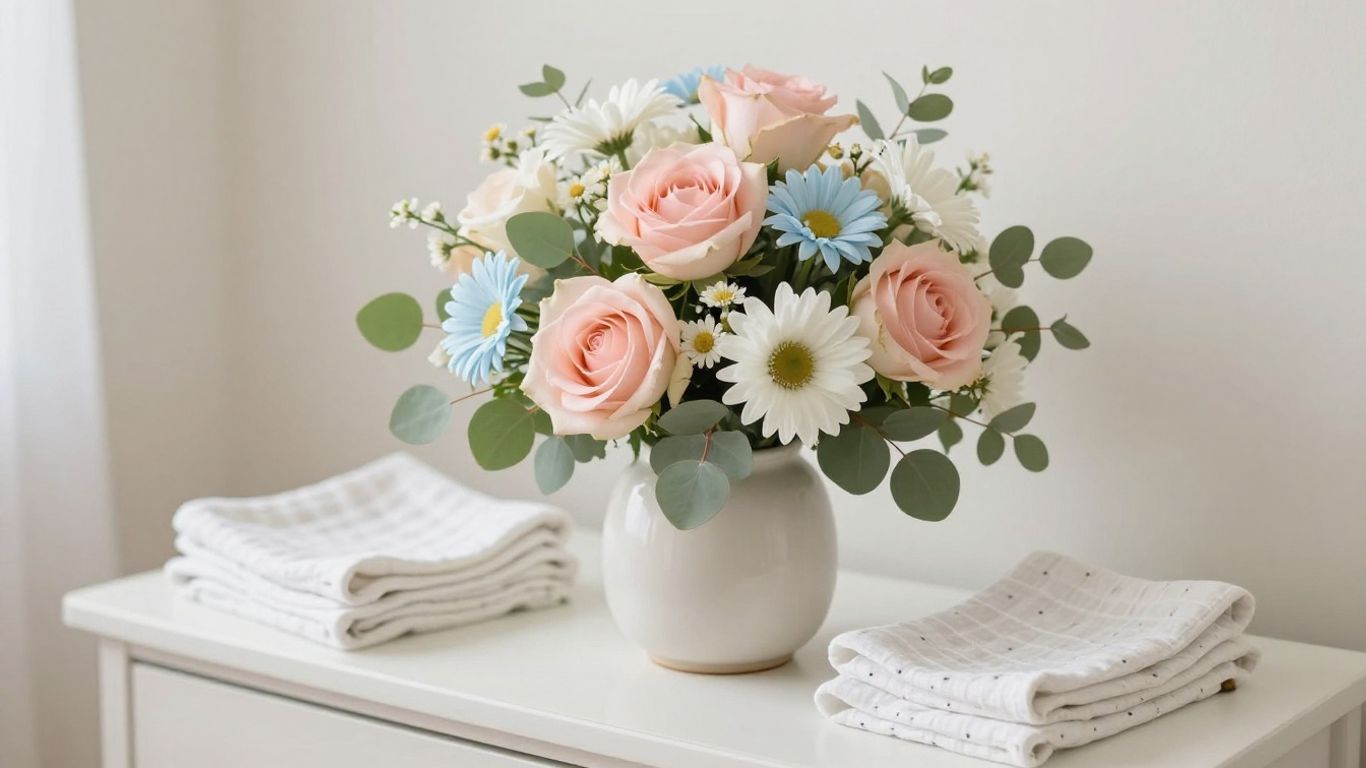
Traditional pink and blue arrangements remain popular, particularly when the family has already chosen those colors. Blush roses, pink carnations, and pale lisianthus can create a delicate baby girl style, while blue-toned accents, white flowers, and fresh greens offer a classic baby boy palette.
These conventions are optional, not rules. The flowers should reflect the family’s preferences rather than assumptions about what a baby “should” receive. A florist can also soften a strong color with cream, peach, or greenery so the result feels modern.
Gender-neutral flowers and modern color palettes
Gender-neutral arrangements can be just as celebratory, with butter yellow, apricot, lavender, white, sage, or pale green creating a relaxed look. A mix of small blooms and textured foliage often feels contemporary without becoming too formal.
If you are unsure, choose a palette already associated with the nursery or the parents’ home. Warm neutrals work especially well when you want the flowers to blend naturally into different rooms.
Flower meanings that suit a new arrival
Many people enjoy choosing flowers for their traditional associations, although the personal gesture matters more than a strict dictionary of meanings. Roses can suggest affection, daisies cheerfulness, and lilies purity, while greenery brings a sense of freshness and renewal.
A simple comparison can help you choose the mood without overthinking it:
| Flower or element | General feeling | Useful style |
|---|---|---|
| Roses | Affection and tenderness | Classic, soft bouquet |
| Daisies | Cheer and innocence | Casual, bright arrangement |
| Carnations | Warmth and lasting beauty | Compact, durable display |
| Tulips | Freshness and optimism | Clean, modern design |
| Greenery | Calm and renewal | Natural, gender-neutral palette |
The table is only a starting point. Seasonal availability may affect the final selection, and a thoughtful florist can make substitutions while preserving the overall color and feeling.
Non-floral additions such as balloons and gifts
A small balloon, soft toy, baby blanket, or keepsake can turn flowers into a more complete welcome gift. Choose additions that are useful or easy to store, especially when the family is already receiving many presents. Avoid anything with loose parts, strong fragrances, or bulky packaging.
For inspiration beyond flowers, new baby gift ideas can help you consider personalized touches while keeping the arrangement gentle and suitable for a newborn’s space. The final gift does not need to be large; one well-chosen extra is often plenty.
Select a safe and practical arrangement
Newborns and recovering parents can be sensitive to their surroundings, so practicality should shape the selection from the beginning. The safest approach is to ask about allergies when possible and to choose a display that does not crowd the room. A good arrangement is lovely at first glance and unobtrusive afterward.
Avoid flowers with strong scents
Heavily scented flowers can overwhelm a small hospital room or nursery, particularly when the family is tired or sensitive to smells. Ask for a low-fragrance design and avoid making scent the main feature of the gift.
A lightly scented or scent-free arrangement also gives the parents more flexibility. They can enjoy the flowers without needing to move them away from the bed, feeding area, or main living space.
Consider allergy and pet-safety concerns
If the bouquet will go to a home with pets, ask the florist about animal-safe choices and keep the arrangement out of reach. Families may also have pollen sensitivities or specific concerns that are not obvious to visitors, so a quick question can prevent an uncomfortable surprise.
When you cannot check in advance, select a compact arrangement with minimal loose pollen and include a note encouraging the recipient to place it safely. Do not assume that a familiar flower is harmless for every household.
Choose a vase arrangement for easy display
A vase arrangement is often more convenient than a wrapped bouquet because it can be placed immediately. Look for a container with a broad base, a manageable height, and enough water to support the stems without making the display top-heavy.
This is especially helpful for hospital delivery, where the recipient may not have scissors, a spare vase, or a free hand. A neat arrangement that arrives ready to display feels polished and considerate.
Keep maintenance simple for busy new parents
The first days with a baby can be unpredictable, so flowers should need very little attention. A florist can prepare conditioned stems and provide brief care instructions, while you can choose a hardy mix that stays presentable if water is not changed immediately.
A practical care note might mention keeping the vase away from direct heat, topping up water when needed, and removing wilted stems. Those small details extend enjoyment without turning the gift into a project.
Personalize your new baby flower delivery
Personalization makes a familiar gift feel distinctly meant for this family. The baby’s name, a meaningful color, or a note written in your own voice can carry more weight than simply choosing the largest bouquet. Keep the design welcoming for the whole household, not only decorative for a photograph.
Add the baby’s name or a thoughtful message
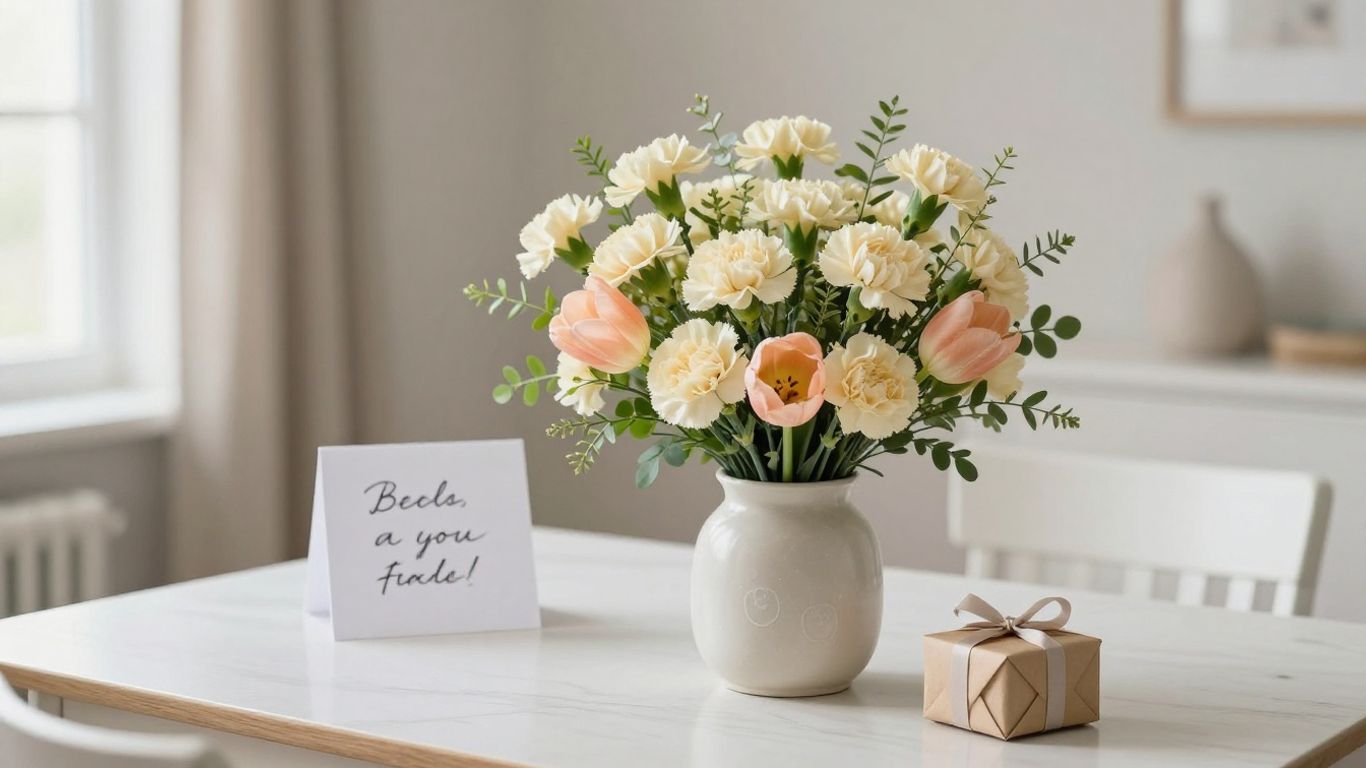
If the name has been announced, adding it to the card creates an immediate connection. If not, use “Baby” or “your beautiful new arrival” rather than guessing. Mentioning the parents, too, helps them feel seen during a moment when attention naturally centers on the baby.
Write something specific if you can. A line about looking forward to meeting the baby or sending support for the early days will feel more personal than a generic congratulations.
Coordinate colors with the nursery
Nursery colors can guide the arrangement without requiring an exact match. Soft green, natural white, warm beige, or muted peach can sit comfortably in many interiors, while a small accent color adds life.
If you know the room uses bold colors, a simple bouquet with one vivid detail may look intentional. If you do not know the decor, greenery and pale flowers are a safe, adaptable choice.
Include keepsake gifts for the family
A keepsake can make the gesture last after the flowers fade. Consider a small photo frame, a quality muslin cloth, a note card for future memories, or a modest treat for the parents if delivery rules allow it.
Choose something useful rather than adding several decorative objects. For a wider gift, a welcoming gift basket may suit a hospital visit, provided the facility accepts deliveries and the contents are appropriate.
Make the arrangement suitable for hospital or home delivery
Hospital deliveries require extra care with size, labeling, and timing. Use the recipient’s full name, ward or room details when available, and the hospital’s official address. For home delivery, include an apartment number, gate instructions, and a phone number if the recipient has agreed to share it.
A bouquet designed for home can be fuller, but a hospital arrangement should be compact and stable. If you are comparing a same-day Altona florist, ask how the design is packaged and whether the recipient needs to be present.
Plan delivery in Altona
Delivery details can make or break an otherwise thoughtful gift. Altona addresses may include homes, workplaces, clinics, and hospitals, each with different access procedures. Confirming the practical information before checkout gives the florist a better chance of delivering at the right moment.
Decide between same-day and scheduled delivery
Same-day delivery is useful when the baby has arrived unexpectedly or you have only just heard the news. Scheduled delivery is often better when you know the family will be home, when the hospital has limited receiving hours, or when you want the flowers to arrive after discharge.
Some services cover nearby areas differently, so check the stated delivery zone rather than relying on a general Melbourne claim. A same-day Altona North delivery service may be relevant only if the destination is actually in Altona North.
Confirm the hospital or home address
Read the address back carefully before paying. Hospitals may need the patient’s name, maternity unit, room number, and a contact number, while a private home may require clear instructions about entry or a safe drop-off point.
If the baby is still in hospital, ask whether flowers are permitted in the room. Some wards restrict fresh flowers, in which case a home delivery or non-floral gift may be the kinder option.
Check delivery windows and availability
Delivery windows are usually estimates rather than appointments. Ask whether the florist can accommodate a morning, afternoon, or specific date, and check the order cut-off for same-day requests. If the family has a planned visit, leave enough time for a missed attempt or access delay.
A short checklist keeps the order focused:
- Recipient’s full name and preferred contact number
- Exact home, clinic, or hospital address
- Ward, room, unit, or entry instructions where applicable
- Preferred delivery date and acceptable time window
After checking these details, read the confirmation email carefully. Correcting an address before dispatch is much easier than redirecting a bouquet once it is already on the road.
Account for weekends, holidays, and peak periods
Birth announcements often arrive during busy periods, including weekends, public holidays, and popular celebration dates. Availability may be narrower then, and seasonal flowers may be substituted. Ordering ahead is wise when the delivery date matters.
If timing is flexible, prioritize freshness and suitability over a precise hour. A well-made arrangement delivered on the next available window is usually better than a rushed design chosen only because it promises speed.
Order new baby flowers with confidence
A little comparison helps you spend wisely and avoid disappointment. Look at the arrangement’s approximate size, flower types, container, delivery fee, and personalization options rather than judging only the thumbnail image. Reliable ordering is mostly about making expectations clear.
Compare local florists and arrangement styles
Review several styles before choosing: compact vase designs, loose seasonal bouquets, pastel arrangements, and greenery-led options each create a different impression. Pay attention to whether the florist describes flowers as seasonal, florist’s choice, or selected from a fixed recipe.
A local option may be convenient for Altona, but distance alone is not a quality guarantee. Compare the delivery area, ordering deadlines, presentation, and communication. If you are considering Fig & Bloom, use the published service details to check whether the destination and timing fit your order.
Review flower freshness and substitution policies
Seasonal availability means the exact stems may change. Read how substitutions are handled and whether the florist promises to preserve the palette, size, or overall value. A flexible policy is reassuring when it is explained plainly.
Look for clear information about presentation and freshness rather than relying on dramatic promises. Fresh seasonal flowers can be a useful phrase to keep in mind when comparing descriptions, but always review the specific arrangement and delivery conditions.
Set a realistic budget
Set a total budget that includes delivery, a vase, card, and optional extras. A smaller arrangement with good color balance can look more refined than a large bouquet assembled without a clear shape. Decide which element matters most to you before browsing.
If the flowers are being delivered to a facility, avoid paying for features the recipient cannot use, such as an oversized display or elaborate packaging. Put that money toward a keepsake or a more durable flower mix instead.
Confirm the card message and delivery details
Before submitting the order, check the spelling of the baby’s name, the recipient’s name, the address, and the selected date. Read the card message once as if you were the parent receiving it; warmth and clarity matter more than length.
For a final practical reference, Altona flower delivery options can remind you to verify the service area and contact details, even when you ultimately choose a different arrangement. Then save the confirmation and watch for any florist message requesting clarification.
Conclusion
The perfect new baby arrangement is not necessarily the biggest or most traditional one. Choose flowers that suit the family, keep scent and maintenance modest, personalize the message, and verify every delivery detail so the gift arrives as a genuine welcome rather than another complication.
Frequently Asked Questions
What flowers are best for welcoming a new baby?
Roses, carnations, daisies, tulips, and gentle seasonal flowers are popular choices. Select blooms with a pleasant appearance, manageable care needs, and a fragrance level suited to the recipient’s surroundings.
Should new baby flowers be pink or blue?
Pink and blue are classic options, but they are not required. White, yellow, lavender, peach, sage, and mixed seasonal palettes can feel modern, welcoming, and appropriate for any baby.
Are flowers suitable for a hospital room?
They may be, but hospital policies vary. Confirm that fresh flowers are permitted and provide the patient’s full details, ward information, and the facility’s preferred delivery instructions.
How can I choose flowers for a family with pets?
Ask the florist about pet-safe options and tell the recipient to keep the arrangement out of reach. If you cannot check the household’s needs, choose a conservative design and include clear placement guidance.
Is a vase arrangement better than a wrapped bouquet?
A vase arrangement is often easier because it can be displayed immediately. A wrapped bouquet may offer more flexibility, but it requires a clean vase, water, and some preparation from the recipient.
What should I write in a new baby flower card?
Keep the message warm and direct. Welcome the baby, congratulate the parents, and add a personal line about looking forward to meeting the new arrival or supporting the family.
When should I order new baby flowers?
Order as soon as you know the preferred delivery address and date. For same-day requests, check the florist’s cut-off time; for weekends, holidays, or hospital deliveries, scheduling ahead is safer.