Key Takeaways
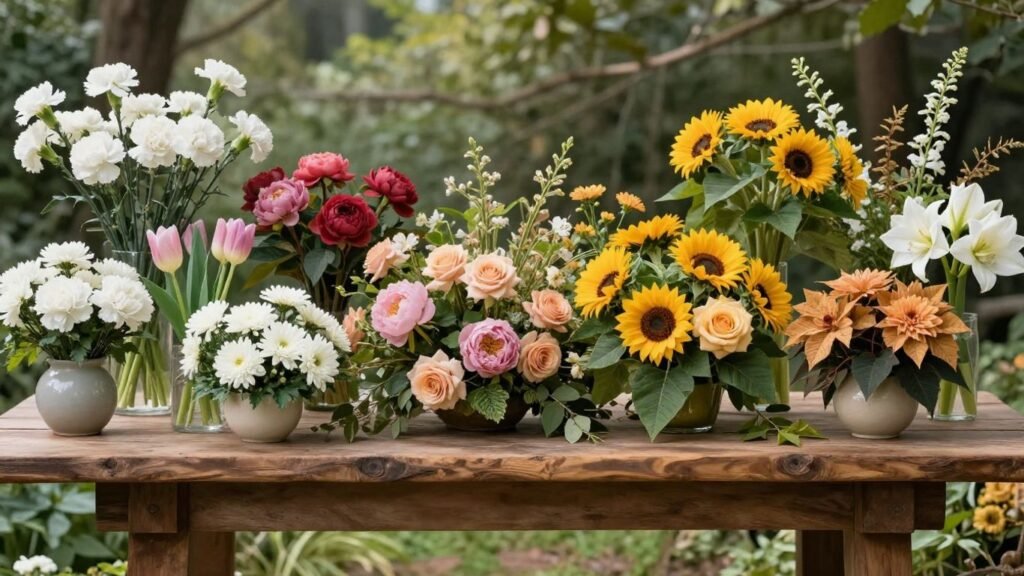
The best flowers for each month reflect both the garden’s natural rhythm and the mood of the season. Use these pairings as a starting point, then adjust for your climate, color palette, and the occasion.
- January favors hardy, long-lasting blooms such as carnations and hellebores.
- Spring moves from bright daffodils and tulips to delicate sweet peas and ranunculus.
- Summer brings fragrant lavender, sunny stems, roses, delphiniums, dahlias, and gladiolus.
- Autumn flowers offer rich color through asters, chrysanthemums, marigolds, and cosmos.
- Winter arrangements feel especially welcoming with poinsettias, amaryllis, evergreens, and warm seasonal tones.
1. January: Carnations and hellebores
January gardens are often quiet, but that does not mean they have to feel bare. Carnations bring dependable color to bouquets, while hellebores offer an understated nod to the new year in the garden. Together, they create an arrangement that feels composed rather than overly festive.
Carnations are especially useful when you want flowers that hold their shape and remain attractive for days. Their ruffled petals suit both simple grocery-store bouquets and more formal arrangements. Choose pale blush, cream, or red blooms depending on whether you want the mood to feel soft, classic, or celebratory.
Hellebores add a woodland quality, with nodding flowers and deep green foliage that look beautiful against winter light. They are also lovely in a small vase where their delicate shape can be appreciated up close. For a birthday or winter gathering, this pairing offers quiet seasonal character without relying on bright spring color.
2. February: Violets and primroses
February’s flowers are small, fresh, and quietly optimistic. Violets bring richly colored petals and a gentle fragrance, while primroses brighten windowsills, containers, and early garden beds. They are a charming choice when winter still has a firm hold but spring is beginning to stir.
Violets work well in petite arrangements, especially when grouped with modest greenery or fine branches. Their purple, blue, and white tones can be repeated in ribbons, table linens, or painted vessels. Primroses, meanwhile, offer more visible color and come in cheerful yellows, pinks, reds, and whites.
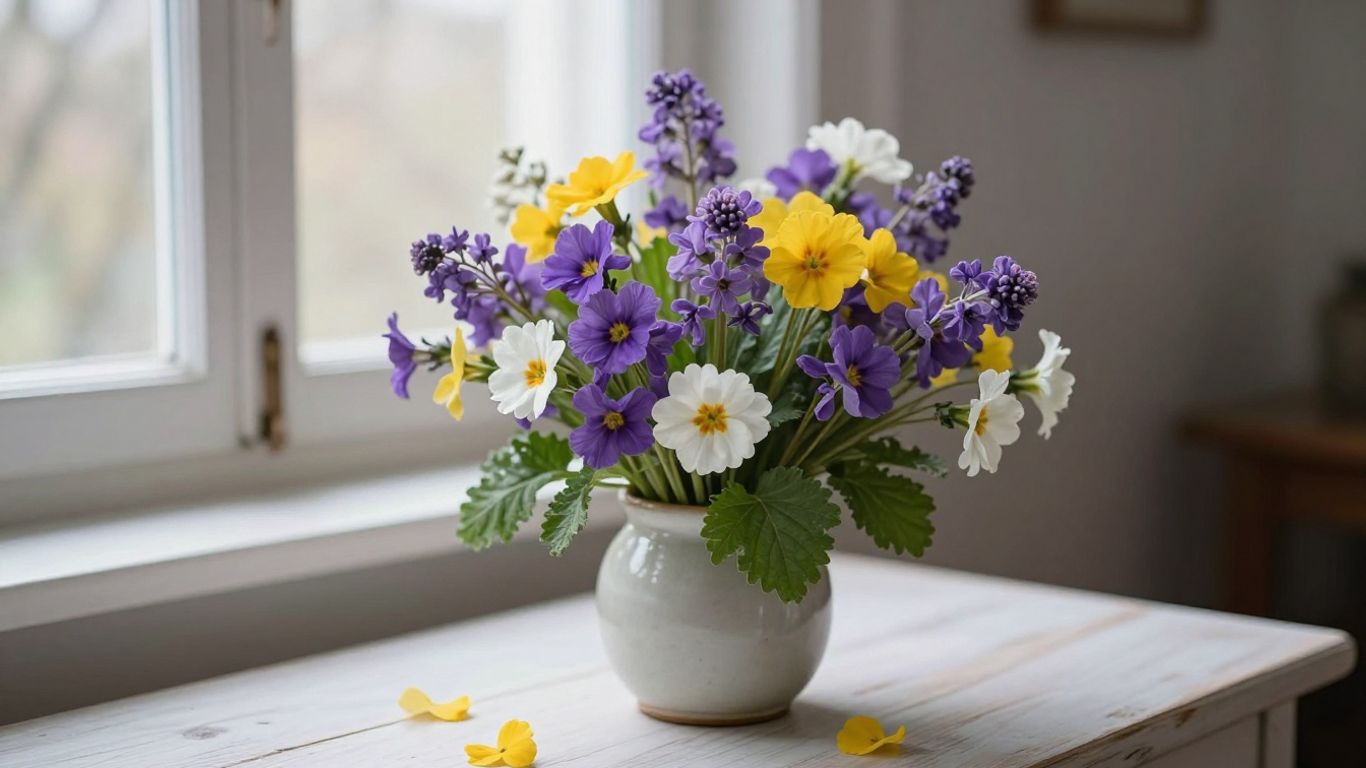
For a thoughtful birthday gift, combine both flowers in a low container rather than a tall bouquet. Their scale feels personal and easy to live with, and the arrangement can transition from a dining table to a bedside table without looking out of place. The tradition of matching blooms to birth months is also explored in this birth month flower guide, which can add a little meaning to the choice.
3. March: Daffodils and tulips
March arrives with a noticeable lift in color. Daffodils bring their familiar yellow trumpets, while tulips offer a broader range of shades and silhouettes. The two flowers together make a bouquet feel unmistakably springlike without becoming too elaborate.
Daffodils are strongest when arranged in a loose, informal style. Their stems and cups have enough personality to stand on their own, particularly in a simple ceramic pitcher. Tulips are more adaptable: they can be arranged in a tight monochrome bunch or mixed in several colors for a lively table centerpiece.
Keep the palette restrained if you want the flowers to feel elegant. Yellow and cream create a gentle early-spring effect, while coral, pink, and orange make the arrangement more energetic. Seasonal flowers are often at their most appealing when they are allowed to look like themselves, rather than being forced into a rigid shape.
4. April: Sweet peas and ranunculus
April flowers tend to be lighter in both color and form. Sweet peas bring fluttering petals and a sweet scent, while ranunculus contribute layered, rose-like heads on slender stems. This is a pairing for someone who enjoys a bouquet with movement and a little romance.
Sweet peas are best appreciated in smaller bunches, where their winding stems and delicate flowers remain visible. They suit pale pink, lavender, white, and soft coral palettes particularly well. Ranunculus add density, giving the arrangement enough weight to feel generous without losing its airy quality.
Try placing them in a narrow-necked vase that supports the stems naturally. A few sprigs of foliage or flowering branches can fill the gaps without making the bouquet look crowded. For a garden-minded reader, a guide to growing flowers by season can provide useful inspiration beyond the vase.
5. May: Peonies and lily of the valley
May is one of the most anticipated months for flowers, thanks in part to the arrival of peonies. Their full, soft heads make an immediate impression, while lily of the valley offers a smaller, more fragrant counterpoint. The combination balances abundance with delicacy.
Peonies can carry an entire arrangement in a single color, especially in coral, blush, or white. Their rounded blooms look beautiful at different stages, from tight buds to open, layered flowers. Lily of the valley is more restrained, with tiny bell-shaped blooms that are best used as an accent rather than the main event.
Because both flowers have a strong seasonal identity, they work best with a light touch. Use a clear vase, loose greenery, and plenty of breathing room around the stems. If you are choosing flowers for a birthday, the history and symbolism collected in this birth flower history may help you settle on a meaningful color and style.
6. June: Roses and delphiniums
June brings a generous mix of fragrance, height, and color. Roses offer familiar beauty in nearly every palette, while delphiniums send blue, lavender, or white spires above the arrangement. Together, they create a bouquet with both a strong focal point and a graceful vertical line.
Garden roses feel lush and relaxed, whereas classic hybrid teas create a more polished silhouette. Delphiniums soften that formality by adding height and movement. They are particularly effective when the roses are arranged low and the taller stems rise naturally behind them.
When choosing flowers for a summer celebration, think about the setting as much as the blooms. A compact arrangement suits an indoor dinner, while a larger, looser design works well outdoors. Seasonal availability can also guide the decision; this flowers in season guide is a useful reference when you want a bouquet that feels connected to the time of year.
A simple comparison can make planning easier:
| Flower | Visual role | Best mood | Useful pairing |
|---|---|---|---|
| Roses | Rounded focal bloom | Romantic and classic | Delphiniums or greenery |
| Delphiniums | Tall accent | Airy and summery | Roses or grasses |
| Lavender | Textural filler | Relaxed and fragrant | Sunflowers or foliage |
| Sunflowers | Bold focal bloom | Cheerful and informal | Lavender or cosmos |
The table is only a starting point, since color and vase shape can change the effect considerably. Still, identifying each flower’s role helps prevent a bouquet from becoming visually crowded. A good arrangement usually needs one clear focal bloom, one supporting shape, and some open space.
7. July: Lavender and sunflowers
July flowers are expressive, warm, and comfortable in the spotlight. Lavender contributes slender purple spikes and a familiar scent, while sunflowers bring broad golden faces that instantly brighten a room. The pairing feels at home in a kitchen, on a porch, or at a relaxed summer lunch.
Lavender is useful for softening the scale of sunflowers. Tuck a few stems around the larger blooms, or use it as a loose border in a wider arrangement. If the sunflowers are already dramatic, keep the container rustic and the greenery uncomplicated.
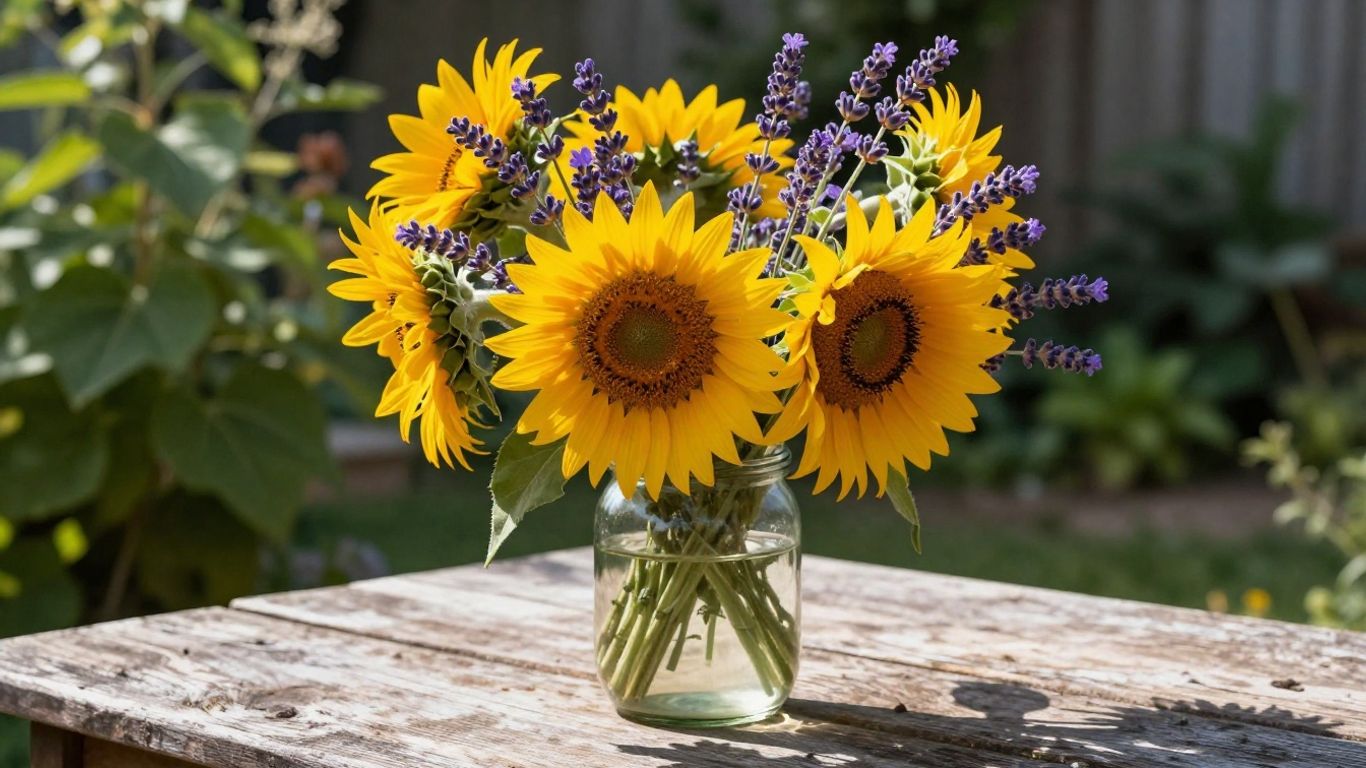
This combination also suits outdoor entertaining, where informal flowers can sit comfortably beside natural wood and leafy plants. For readers planning a broader patio setting, ideas about outdoor living spaces may be a separate source of inspiration, even though the flowers themselves can remain wonderfully simple. The goal is an arrangement that looks gathered, not overworked.
8. August: Dahlias and gladiolus
August gardens are full of saturated color and strong shapes. Dahlias bring intricate petals in forms ranging from neat pompons to dinner-plate blooms, while gladiolus provide tall, architectural stems. This month’s pairing is ideal when you want flowers that can hold their own in a large room.
Dahlias are natural focal flowers, so begin with a few well-spaced blooms rather than filling every gap. Gladiolus can then rise behind them, creating height without hiding the dahlia heads. A restrained palette of burgundy, cream, and plum feels dramatic; hot pink, orange, and red make the arrangement more exuberant.
Use a heavy vase for tall gladiolus, particularly if the display will sit somewhere busy. Remove lower leaves that would sit below the waterline, and refresh the water regularly. The flowers will look more polished when the stems are supported and the arrangement is kept away from intense heat.
9. September: Asters and chrysanthemums
September has a softer edge than high summer, and its flowers often reflect that shift. Asters bring small, starry blooms in blues, purples, pinks, and whites, while chrysanthemums add fullness and staying power. Together they make a bouquet that feels generous but not heavy.
Asters are excellent for filling open spaces between larger flowers. Their fine texture keeps chrysanthemums from looking too dense, especially in a mixed arrangement. Choose a low bowl for a garden-like display or a taller vase if you want the asters to create a loose, cloudlike outline.
Chrysanthemums are available in many forms, so look for varieties that suit the mood you want. Cushion blooms feel casual, while spider or decorative types add a more sculptural note. In early fall, combine them with seed heads, branches, or muted foliage to let the seasonal transition show naturally.
10. October: Marigolds and cosmos
October flowers can be bright without feeling summery. Marigolds bring copper, orange, and golden yellow, while cosmos add delicate pink or white petals on slender stems. The contrast between sturdy marigolds and airy cosmos gives an arrangement a pleasant, hand-picked quality.
Marigolds are especially effective in small clusters or low centerpieces. Their warm colors echo pumpkins, autumn leaves, and candlelight, but they do not require a themed display. Cosmos add height and movement, helping the arrangement feel lighter around the edges.
Keep the supporting foliage green or slightly silvery so the flowers remain the focus. A few branches with small leaves can introduce an autumnal texture without competing with the petals. This is also a good month to choose a bouquet based on personal symbolism, since birth flower meanings can make a seasonal gift feel more considered.
11. November: Chrysanthemums and alstroemeria
November calls for flowers that can bring warmth into shorter days. Chrysanthemums offer rich rust, bronze, cream, and burgundy shades, while alstroemeria add graceful stems marked with delicate inner patterns. Both are versatile enough for everyday arrangements and special occasions.
Alstroemeria have a light, open shape that keeps fuller chrysanthemums from becoming too formal. Place them around the edges of a bouquet, allowing their stems to curve outward. Chrysanthemums can sit closer to the center, where their texture creates a visual anchor.
A few autumn branches or deep green leaves will complete the arrangement without making it feel overly seasonal. Avoid crowding the vase, since the alstroemeria need space to show their shape. If you prefer a more personal approach, choose one flower for its color and the other for its form rather than trying to follow a strict symbolic rule.
12. December: Poinsettias and amaryllis
December flowers are naturally theatrical, but they can still be arranged with restraint. Poinsettias bring the season’s familiar red, white, or blush tones, while amaryllis offer tall stems crowned with broad, trumpet-shaped blooms. Together they make a strong centerpiece for a holiday home.
Poinsettias work well as potted plants or as part of a display with evergreen branches. Amaryllis are more sculptural and can stand alone in a narrow vase, especially while their buds are opening. Combining the two is most successful when one flower leads and the other provides color or height.
For a quieter winter arrangement, choose white poinsettias, pale amaryllis, and silvery foliage. For something more traditional, use red blooms with natural greenery and a warm ceramic vessel. A few practical habits help keep holiday flowers looking fresh:
- Keep arrangements away from radiators, fireplaces, and direct heat.
- Change vase water regularly and trim stems at an angle.
- Remove fading flowers before they affect the surrounding blooms.
- Place tall stems where they will not be brushed or knocked over.
These small choices extend the life of the display and make it easier to enjoy throughout the month. A seasonal bouquet does not need to be elaborate; a thoughtful color combination and a suitable spot can do most of the work.
Conclusion
The best flowers for each month are less about strict rules than about noticing what feels natural in the season. From January’s quiet hellebores to December’s dramatic amaryllis, each pairing offers a different way to bring color, fragrance, and character into everyday spaces.
Frequently Asked Questions
What are the best flowers for each month?
Popular pairings include carnations and hellebores in January, violets and primroses in February, daffodils and tulips in March, and poinsettias and amaryllis in December. The ideal choice can vary by climate, availability, and personal taste.
Are these flowers available everywhere in their listed month?
Not always. Bloom times depend on local weather, growing conditions, greenhouse production, and whether you are buying cut flowers or plants. A local florist or garden center can suggest close seasonal alternatives.
Which monthly flowers are best for bouquets?
Roses, carnations, tulips, ranunculus, chrysanthemums, alstroemeria, and amaryllis are all useful bouquet flowers. Their vase life and form make them relatively easy to arrange and enjoy indoors.
Which flowers are most fragrant?
Sweet peas, violets, lily of the valley, lavender, roses, and some hellebores can add fragrance. Scent varies by cultivar and may be more noticeable in a warm, sheltered room.
How should seasonal flowers be kept fresh?
Use a clean vase, fresh water, and a sharp stem cut. Keep flowers away from direct sun, drafts, ripening fruit, and heating vents, and remove leaves that would sit below the waterline.
Can I mix flowers from different months?
Yes. Monthly pairings are useful guides, not restrictions. Mixing flowers can create a beautiful arrangement when the colors, textures, and care needs are compatible.
What is a thoughtful flower choice for a birthday?
You can choose the recipient’s birth-month flower, a bloom in their favorite color, or a seasonal flower that suits the celebration. Adding a handwritten note often makes a simple bouquet feel more personal.