Key Takeaways
Fresh flowers last longest when you begin with healthy stems and continue with simple, consistent care. Clean water, thoughtful placement, and small daily checks make a noticeable difference.
- Choose blooms with firm stems, fresh foliage, and petals that are not bruised.
- Trim stems at an angle and remove every leaf that would sit below the waterline.
- Use a clean vase, fresh water, and commercial flower food when appropriate.
- Keep arrangements cool and away from sunlight, fruit, heating vents, and drafts.
- Change the water regularly and remove fading flowers before they affect the rest.
Choose flowers with lasting freshness
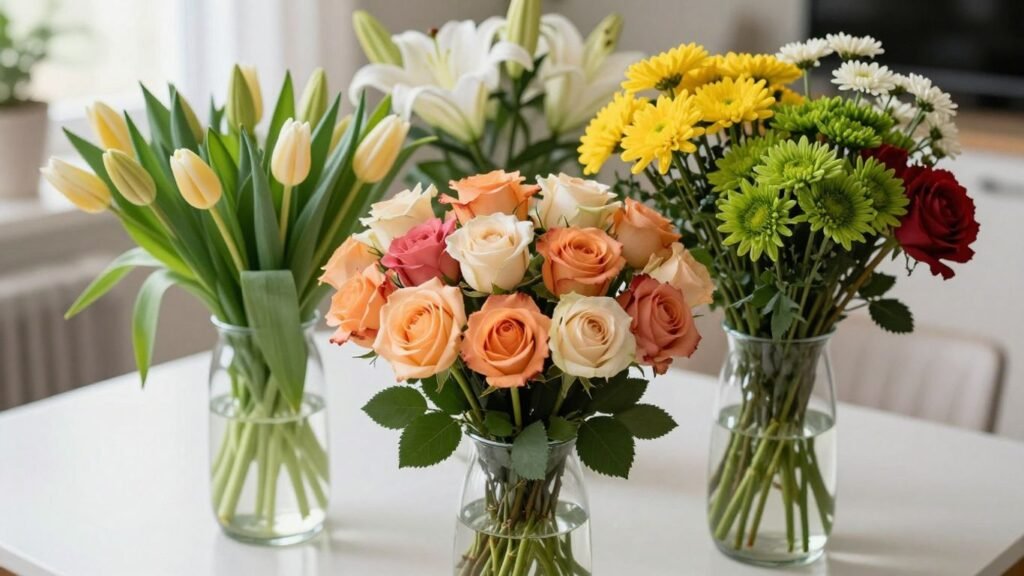
The easiest way to extend a bouquet’s life is to start with flowers that have not already spent several days in transit or on display. When choosing blooms, look beyond color and overall shape. Firm stems, clean leaves, and partly opened buds usually give you more time to enjoy the arrangement.
Freshness is also affected by the flower’s variety and growing season. A locally sourced bouquet may have had less time between cutting and arranging, while seasonal flowers are often naturally better suited to the conditions in which they were grown.
Signs of healthy, long-lasting blooms
Healthy flowers feel substantial rather than limp, and their stems should stand upright without looking crushed or dried out. Leaves should be green and free from widespread spots, yellowing, or mushy edges. A few outer petals may show minor handling marks, but the main bloom should look hydrated and evenly colored.
For many varieties, a little remaining room to open is a good sign. Avoid flowers that are already dropping petals, have brown edges, or appear fully exhausted, even if their color is still attractive.
Which flower varieties typically last the longest
Carnations, chrysanthemums, alstroemeria, lilies, and some varieties of roses can often remain attractive for a week or more with attentive care. Lisianthus and many orchids may also hold their form well, though their needs differ from those of softer-stemmed flowers.
Longevity is never guaranteed by variety alone. A carefully conditioned tulip can outlast a neglected chrysanthemum, so treat the expected lifespan as a useful guide rather than a promise.
How to check stems, leaves, buds, and petals
Turn the bouquet gently so you can inspect the lower stems and the undersides of the leaves. Stems should not feel slimy, hollow, or sharply bent. Buds should be firm, while open petals should be springy and free of excessive bruising.
If you are buying from a shop, ask when the flowers arrived and whether they have already been conditioned. This simple question can tell you more than a perfect-looking display. A helpful flower freshness guide can also reinforce the basic checks to make before bringing a bouquet home.
Why buying locally or seasonally can make a difference
Flowers purchased close to where they are grown may spend less time in storage and transportation. That can mean better hydration and fewer bruised petals when they reach your vase. Seasonal flowers are also more likely to be harvested at a suitable stage for their natural growing cycle.
This does not mean imported or out-of-season flowers are poor choices. It simply makes freshness easier to judge when you know the expected harvest period and can see how recently the stems were prepared.
Prepare your flowers before arranging them
Preparation is where a bouquet’s future often changes. Even beautiful flowers may struggle if their stems are sealed, their leaves sit in water, or their vase is not clean. Give yourself a few quiet minutes before arranging, and handle the stems gently rather than forcing them into position.
The goal is to help each stem drink efficiently while reducing the conditions that encourage decay. These first steps are simple, but they are among the most reliable answers to how to make fresh flowers last longer.
Remove packaging and inspect the stems
Take off paper, rubber bands, and decorative ties so air can move around the bouquet. Rinse away loose debris and look for broken, crushed, or discolored sections. If a stem is badly damaged, trim above the injury or remove it before it contaminates the rest of the arrangement.
Do not leave flowers wrapped tightly for long periods. Packaging can protect them during transport, but it can also trap moisture and press petals together once the bouquet is home.
Trim stems at the right angle
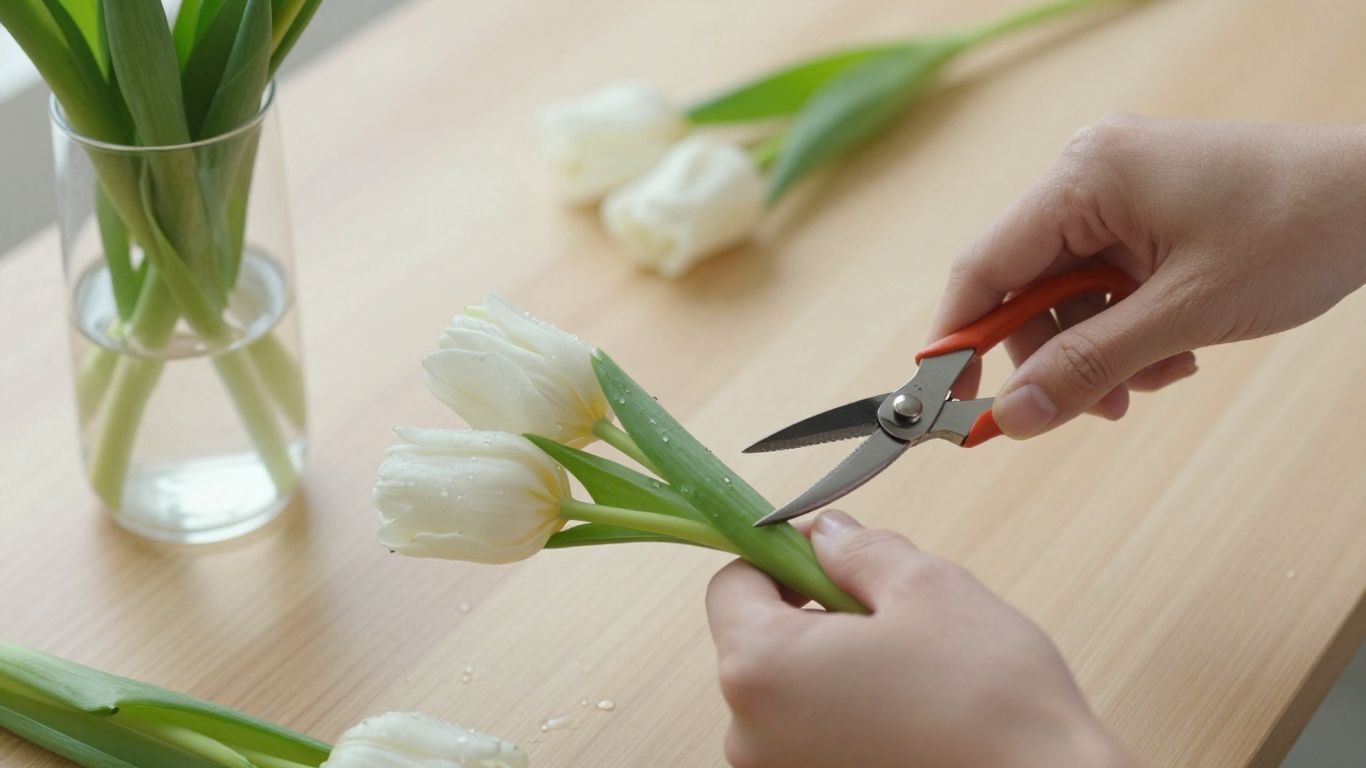
Use a clean, sharp knife or floral snips to remove about one to two inches from each stem. Cut diagonally so the base is less likely to sit flat against the bottom of the vase. Make the cut just before placing the flower in water, since exposed stem tissue can dry quickly.
Avoid crushing the stem with blunt scissors. A clean cut leaves more open tissue available for water uptake and creates less ragged material for bacteria to colonize.
Strip leaves below the waterline
Remove leaves that would be submerged, while keeping healthy foliage above the water to support the shape of the arrangement. Underwater leaves break down quickly and can feed bacterial growth. They also make the water unpleasant before the flowers themselves begin to fade.
Work slowly around each stem rather than stripping it bare. The remaining foliage gives the bouquet fullness and helps you create a balanced design.
Condition wilted flowers before displaying them
If flowers arrive thirsty, recut the stems and place them in a clean container of room-temperature water. Keep them in a cool, shaded place for several hours while they rehydrate. Some delicate blooms benefit from loose paper support while their stems regain firmness.
Conditioning is not a cure for old or damaged flowers, but it can help recently cut blooms recover from transport. For additional guidance on harvesting and conditioning cut flowers, focus on timing, clean tools, and immediate hydration.
Use the right vase, water, and flower food
A vase is more than a decorative container. Its cleanliness, shape, and water level affect how easily stems can drink and how quickly the arrangement becomes unstable. Choose a vessel that supports the flowers without squeezing them together.
Water quality matters mainly because stagnant, contaminated water shortens the life of cut flowers. Start clean, check the level often, and avoid adding ingredients simply because they are familiar household remedies.
How to clean and choose a suitable vase
Wash the vase with hot, soapy water and rinse it thoroughly before adding flowers. A narrow opening can support slender stems, while a wider vessel is better for a loose, spreading arrangement. The vase should be tall enough to support the stems without forcing the blooms to lean.
If an old arrangement left a film inside, scrub it away before reusing the vessel. A spotless vase matters because residue can introduce microorganisms before the flowers have had a chance to settle.
The ideal water level for different stems
Fill the vase high enough to cover the freshly cut ends, but do not automatically submerge every inch of every stem. Soft, leafy stems often need less water, while woody or thirsty stems may benefit from a deeper level. Follow the needs of the arrangement rather than using one fixed measurement.
Check the level daily, especially during the first few days. Crowded bouquets can drink surprisingly fast, and a low waterline can leave the upper stem tissue dry.
When to use commercial flower food
Use commercial flower food when it is supplied with the bouquet or recommended for the varieties you have chosen. Mix it according to the packet directions, since adding extra concentrate does not make it work better. The solution should be fully dissolved before the flowers go in.
Flower food is most useful when paired with a clean vase and regular water changes. It cannot compensate for submerged leaves, overheated placement, or stems that were already badly damaged.
What homemade flower-food ingredients can and cannot do
Home remedies vary widely, and their effects are not consistent across flower types. Sugar may provide an energy source, but it can also encourage microbial growth if the water is not kept clean. Acidic ingredients may alter water chemistry, while household disinfectants can injure stems when mixed incorrectly.
For that reason, plain fresh water is often safer than an improvised recipe. If you are curious about tested approaches, this comparison of homemade flower remedies can help you distinguish between popular claims and practical care.
Place the arrangement in the best location
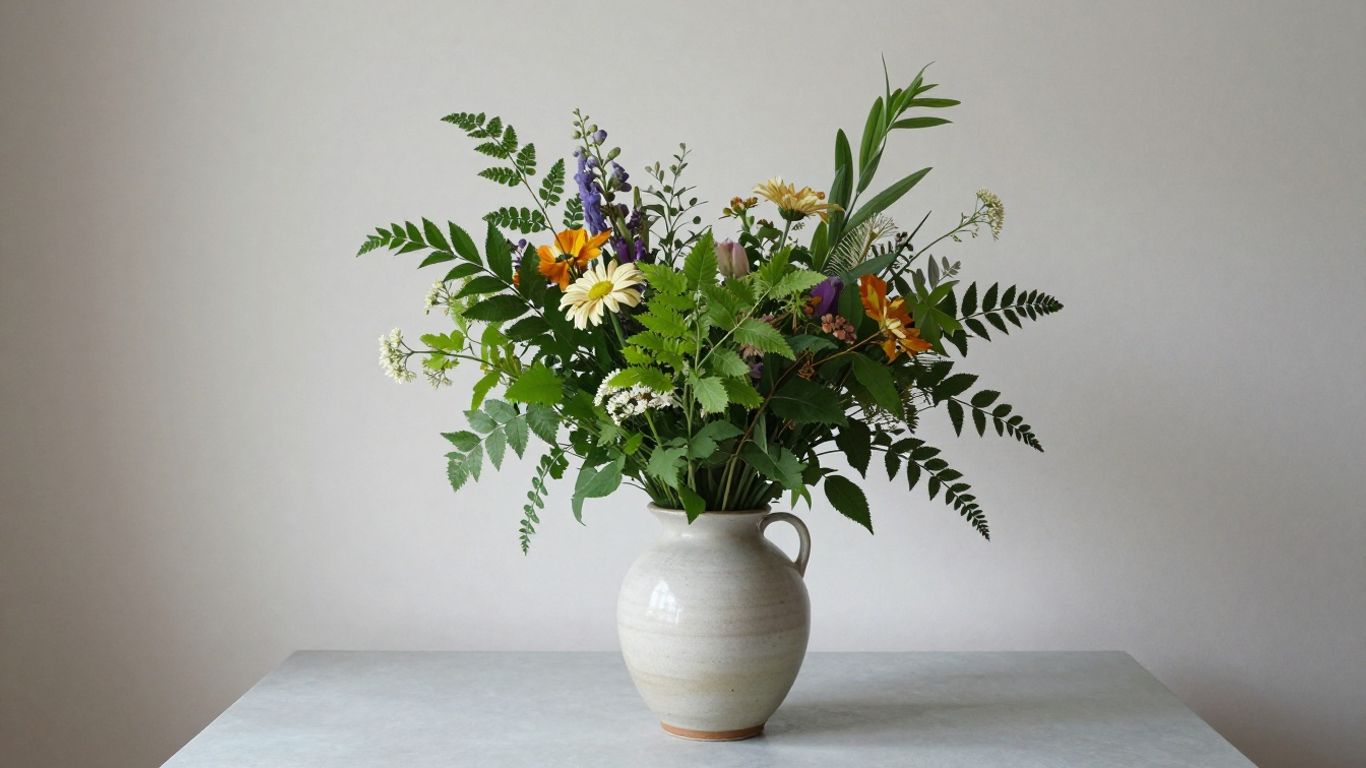
Where you put the vase can be just as influential as how you prepare it. Flowers generally keep their shape longer in a cool, stable room with indirect light. A spot that feels comfortable to you may still be too warm if it sits beside a sunny window or radiator.
Think of the arrangement as a living display that continues to lose water and respond to its surroundings. A little distance from heat, fruit, and busy walkways protects both freshness and form.
How temperature affects flower longevity
Warm rooms speed up water loss and encourage flowers to open and fade more quickly. Cooler indoor temperatures usually slow that process, provided the flowers are not exposed to freezing air. Try to keep the vase away from sudden temperature changes as well.
If the room becomes hot during the afternoon, move the arrangement to a cooler interior location. Avoid placing it directly under a fan or air-conditioning outlet, where constant moving air can dry the petals.
Why direct sunlight and heat sources are harmful
Direct sun warms the water and petals while increasing evaporation. Radiators, fireplaces, stovetops, and bright appliances can have a similar effect. Even a few hours of concentrated heat may leave delicate blooms noticeably softer by evening.
Choose bright indirect light instead. The flowers will still be visible and attractive, but their stems and petals will not be pushed through the same rapid cycle of heating and dehydration.
Keeping flowers away from fruit and drafts
Ripening fruit releases ethylene, a natural gas that can speed aging in many flowers. Keep bowls of bananas, apples, pears, and other ripening produce several feet away from the vase. Drafts from open doors and vents can also dry petals and make light stems move constantly.
A calm location with moderate air circulation is preferable to either stale heat or a strong breeze. Small environmental changes often add more useful protection than an elaborate care trick.
Choosing a low-traffic spot to prevent damage
Set the vase where sleeves, pets, children, and passing bags are unlikely to knock it. Repeated bumps can bruise petals, snap stems, and stir debris into the water. A stable table or shelf with a level surface is usually ideal.
Leave enough space around the arrangement to turn it during daily checks. Easy access makes it more likely that you will notice low water, fallen leaves, or a fading stem promptly.
Maintain fresh flowers throughout the week
Ongoing care does not need to take more than a few minutes each day. Look at the water, inspect the stems, and remove anything that has begun to deteriorate. These small habits prevent one failing stem from affecting an otherwise healthy bouquet.
A simple routine is easier to follow when you connect each task to a visible sign. Cloudiness, a lower waterline, loose petals, and soft foliage all tell you what the arrangement needs next.
How often to change the water
Change the water every two to three days, or sooner if it becomes cloudy, foul-smelling, or filled with debris. Wash or rinse the vase before refilling it, and remove any leaves that have fallen below the surface. Top-ups are useful between changes, but they do not replace a full refresh.
Thirsty flowers and warm rooms may require more frequent attention. When in doubt, clean water is the safer choice.
When and how to recut the stems
Recut the stems whenever you change the water or when the flowers begin drinking poorly. Remove a small section with a sharp, clean tool and return the stems to water immediately. For woody stems, a slightly deeper cut may expose more usable tissue, but avoid splitting them roughly.
Keep the cut consistent with the stem’s shape and the vase’s depth. Recutting is most helpful when combined with clean water, not used as a substitute for it.
Removing fading blooms and damaged foliage
Take out flowers that are collapsing, shedding heavily, or developing rot. Remove yellow leaves and any foliage that has become soft or slimy. This improves the appearance of the bouquet and limits the spread of decay.
Do not discard a whole arrangement because one flower is fading. Often, removing the weak stem gives the remaining blooms more room and makes the display look fresh again.
Adjusting care for cloudy or foul-smelling water
Cloudy water is a sign that the arrangement needs attention rather than a minor cosmetic adjustment. Empty the vase, wash it thoroughly, rinse the stems, recut them, and refill with fresh water. If the smell remains or several stems are slimy, remove those stems before rebuilding the bouquet.
Daily water checks are a practical part of keeping flowers fresh, and this daily flower care advice offers a useful reminder to monitor both water level and condition. Once the water is clear again, place the arrangement back in a cool location.
| Care signal | Likely issue | Helpful response |
|---|---|---|
| Low waterline | Stems are drying out | Add fresh water and check again later |
| Cloudy water | Debris or microbial growth | Wash the vase and replace all water |
| Drooping heads | Dehydration or blocked stems | Recut stems and rehydrate in a cool place |
| Yellow submerged leaves | Foliage is breaking down | Remove the leaves and refresh the water |
This quick reference works best as a prompt for observation, not as a rigid schedule. The condition of the water and stems should guide the next step.
Troubleshoot common cut-flower problems
Even a well-prepared arrangement can develop problems. Flowers may wilt after a hot journey, stems may become blocked, or one damaged bloom may cloud the whole vase. Respond early, before the visible symptoms spread.
The first question is usually whether the flowers are thirsty, overheated, contaminated, or simply near the end of their natural life. Identifying that difference prevents you from overhandling blooms that only need a clean drink.
What to do when flowers wilt quickly
Check the water level and the cut ends first. If the vase is nearly empty, refill it with fresh water and recut the stems. Move the arrangement away from heat and direct sun, then give it a few hours in a cool, quiet place.
If petals are browning and stems feel soft despite these steps, the flowers may have been old when purchased or seriously damaged in transit. Remove the worst stems and let the healthier ones stand on their own.
How to revive drooping stems
Recut drooping stems under clean water or immediately before placing them into fresh water, depending on the tool and your comfort. Support delicate heads loosely with paper while they rehydrate. Keep them upright and shaded for several hours rather than repeatedly lifting them out to check.
Some flowers recover noticeably; others do not. A partial recovery is still useful, especially when you can redesign the bouquet around the stems that remain firm.
Why stems become slimy or water turns cloudy
Slimy stems and cloudy water usually point to decaying plant material and bacterial growth. Submerged leaves, dirty vases, old water, and bruised stems all contribute. Remove the affected material, scrub the vase, rinse the remaining stems, and recut them before refilling.
If the smell returns quickly, discard the worst stems instead of trying to preserve every flower. A smaller arrangement with clean water will generally last longer than a crowded vase that continually recontaminates itself.
Special care for roses, tulips, lilies, and hydrangeas
Roses benefit from frequent checks for drooping heads and damaged outer petals. Tulips continue to grow and bend after cutting, so give them room and turn the vase occasionally. Lilies can last well when their water remains clean, but remove pollen-bearing anthers carefully once they open to avoid stains.
Hydrangeas are especially thirsty and may need close attention to their water level. Different varieties respond differently, so the best approach is to watch each stem rather than treating the bouquet as a single uniform object.
A dependable routine is more useful than a complicated rescue method:
- Inspect the water and stems each day.
- Remove submerged leaves and fallen petals promptly.
- Recut only with a clean, sharp tool.
- Move stressed flowers to a cooler, shaded spot.
After these checks, give the arrangement time to respond. Fresh water and calm conditions can restore some blooms, while flowers that are truly spent are best removed gracefully.
Conclusion
To make fresh flowers last longer, start with good blooms, prepare every stem carefully, and keep the arrangement clean, cool, and easy to monitor. A few minutes of attention each day can preserve the color, shape, and pleasure of a bouquet well beyond its first display.
Frequently Asked Questions
How long do fresh-cut flowers usually last?
Many cut flowers remain attractive for five to seven days, while well-cared-for varieties may last longer. Their age at purchase, variety, temperature, and water quality all affect the result.
Should fresh flowers be placed in warm or cold water?
Room-temperature water is a practical choice for most mixed bouquets. Very cold or hot water can stress some stems, so avoid extremes unless a particular flower has different care requirements.
Is sugar good for fresh flowers?
Sugar may provide an energy source, but it can also encourage microbial growth when water is not kept clean. Commercial flower food is generally more predictable when used according to its directions.
Can wilted flowers be saved?
Recently wilted flowers may recover after a fresh angled cut, clean water, and several hours in a cool shaded place. Flowers with brown petals, rotten stems, or advanced decay are less likely to revive.
How often should flower stems be recut?
Recut stems when changing the water, usually every two to three days, or sooner when the flowers stop drinking well. Use a sharp, clean tool and return the stems to water promptly.
Why are my flowers dying even though they have water?
Water alone cannot solve heat exposure, blocked stems, dirty vases, submerged leaves, or flowers that were already old. Check the water’s condition, recut the stems, and move the arrangement to a cooler location.
Should I remove leaves from cut flowers?
Remove any leaves that would sit below the waterline, but keep healthy foliage above it. Submerged leaves decay quickly and can make the water cloudy or foul-smelling.