Key Takeaways
Healthy flowers usually need less fuss than people expect, but they do need the right routine. Start by identifying the type of flower, then adjust light, water, soil, feeding, and maintenance to suit it.
- Learn whether you are caring for a garden plant, houseplant, or cut flower.
- Match light and watering habits to the flower’s natural growing conditions.
- Use well-draining soil and containers with drainage holes.
- Remove fading blooms and damaged growth before problems spread.
- Keep cut flowers cool, hydrated, and away from fruit and heat.
Understand what your flowers need
Flower care begins with knowing what is actually in front of you. A potted annual, a returning perennial, a tropical houseplant, and a vase of cut stems may all be called flowers, but they have very different needs. Spend a few minutes identifying the plant before changing its routine. These simple flower care tips become much more useful once they are applied to the right kind of bloom.
Identify annuals, perennials, houseplants, and cut flowers
Annuals complete their life cycle in one growing season, while perennials can return after dormancy when conditions suit them. Houseplants are usually selected for indoor temperatures and filtered light, whereas cut flowers no longer have roots and depend entirely on clean water. Even a page about THCA Flower uses “flower” in a very different context, so naming the plant or arrangement clearly prevents confusion when you look up care instructions.
Check plant tags and care requirements
Plant tags often provide the most useful starting point: light exposure, mature size, hardiness, watering preferences, and bloom season. Keep the tag, take a photograph, or write the name in your gardening notes. If the tag is missing, compare the leaves, stems, and flower shape with a reliable nursery or extension resource rather than guessing from color alone.
Match care to your climate and growing conditions
A flower that thrives in a humid garden may struggle in a dry apartment, even when both spaces receive similar light. Consider temperature swings, indoor humidity, wind, soil type, and the length of your growing season. Garden planning also benefits from seasonal thinking; a landscaping content calendar can help organize planting and maintenance around changing outdoor conditions.
Recognize signs of stress early
Watch the whole plant rather than a single leaf. Drooping can mean thirst, heat, damaged roots, or simply temporary stress after moving, while pale leaves may point to weak light or a nutrient issue. Check the soil, stems, roots, and nearby plants before acting, because early, careful observation often prevents an overcorrection.
Choose the right light and location
Light affects both flower production and the strength of new growth. The brightest window is not automatically the best location, since intense afternoon sun can scorch delicate leaves and flowers. Indoors and outdoors, aim for a spot that fits the plant’s stated requirements and remains reasonably stable through the day.
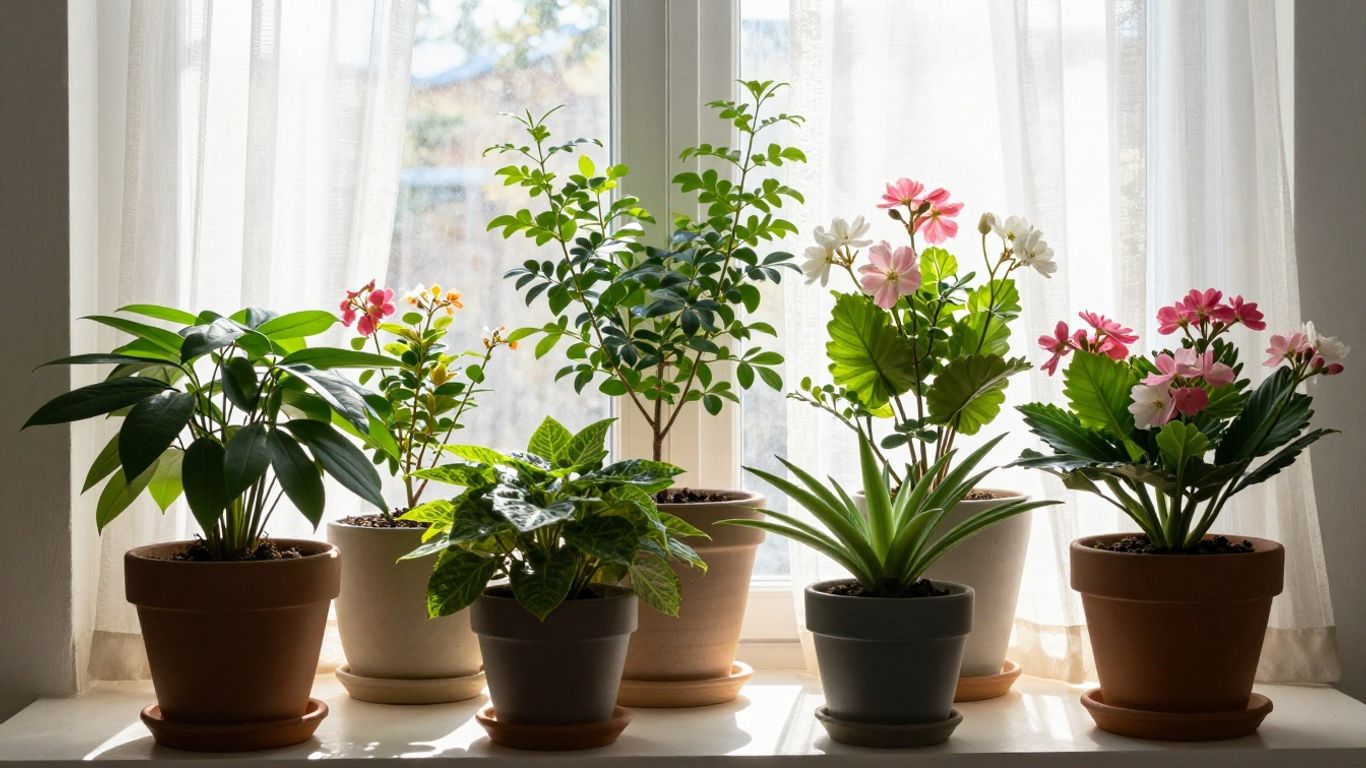
A location that works in spring may become too hot by midsummer, so revisit the placement as the seasons change.
Find the best spot for indoor flowers
Observe the quality of light for several hours rather than judging it at one moment. South-facing windows often provide stronger light, while east- or west-facing windows may offer gentler morning or afternoon exposure. Sheer curtains can soften harsh rays, and plants should be kept far enough from cold glass, radiators, and heating or cooling vents to avoid sudden temperature stress.
Provide adequate outdoor sunlight
Read “full sun,” “partial shade,” and “bright indirect light” as practical guidance rather than decoration on a label. Full-sun flowers generally need several hours of direct light, while shade-tolerant varieties may burn or wilt in a hot, exposed bed. Notice nearby walls, fences, and trees too; they can change the amount of light reaching a plant as the day moves along.
Protect blooms from heat, wind, and drafts
Strong wind can break stems, dry leaves, and knock containers over. Heat reflecting from pavement or a wall can be just as stressful as direct sun, especially for shallow pots. Indoors, keep arrangements and flowering plants away from vents, appliances, fireplaces, and doorways where repeated drafts can shorten their good appearance.
Rotate containers for even growth
Plants naturally lean toward a window, so turn a container a quarter turn every few days if its care requirements allow it. Rotate gently rather than moving it between radically different light levels. If new leaves suddenly fade or the plant begins to droop after a move, return it to a steadier location and make changes more gradually.
Water flowers correctly
Watering is less about following a fixed calendar and more about reading the plant and its environment. A small pot in a warm room may dry quickly, while a large container in shade can stay wet for days. Check the root zone before adding water, and remember that cut flowers need clean vase water rather than moist soil.
Know when the soil needs water
Press a finger into the top inch or two of soil, depending on the container’s size, and notice whether it feels dry below the surface. Lift a small pot to learn how it feels when it is dry compared with after watering. Wilting is a late signal for many plants, so do not wait for leaves to collapse if the soil is already dry.
Use the right watering technique
Apply water slowly to the soil around the base until a little begins to drain from the bottom. This moistens the root ball more evenly than a quick splash on one side. Empty any saucer after the excess has drained, and avoid routinely wetting fuzzy leaves or tightly packed flowers, which can remain damp and develop problems.
Avoid overwatering and poor drainage
Constantly wet soil limits air around the roots and can lead to yellow leaves, weak growth, and decay. A pot without a drainage opening is difficult to manage because excess water has nowhere to go. When a plant declines despite moist soil, inspect the roots and container before assuming it needs fertilizer.
Adjust watering by season and temperature
Plants often use more water during active growth, flowering, and hot weather, and less during cool or dormant periods. Indoor heating can dry the air without making the soil dry at the same rate, so check both rather than watering automatically. A practical rhythm is to check containers on a schedule but water only when the root zone calls for it.
Improve soil, pots, and drainage
Roots need moisture, nutrients, and air in a workable balance. Dense garden soil may hold too much water in a container, while a very light mix can dry out quickly. Choose materials according to the flower’s needs, then watch how the mix behaves after watering instead of relying on its appearance alone.
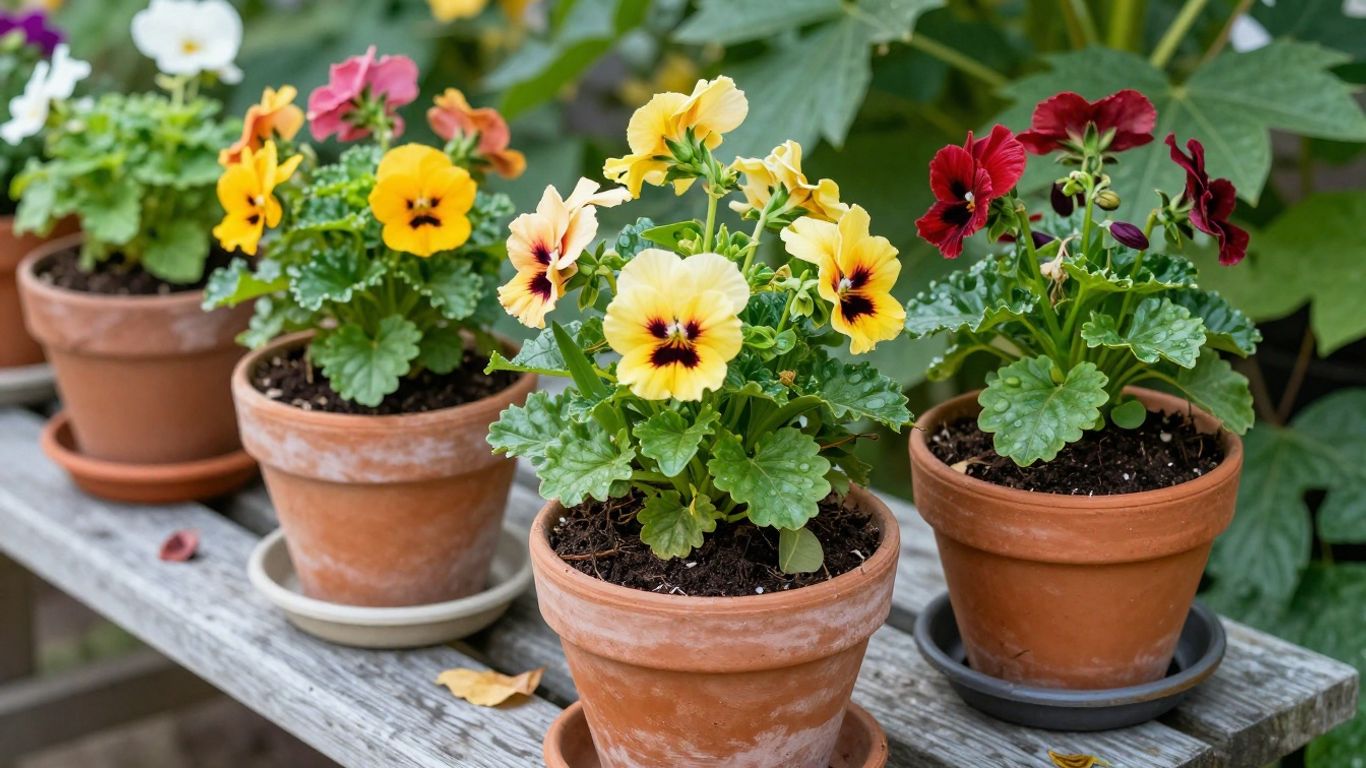
The pot and soil work as a pair, so improving one while ignoring the other rarely solves a persistent problem.
Select nutrient-rich soil for flower varieties
Use a fresh, quality potting mix for containers and amend outdoor beds with organic matter when the native soil is compacted or poor. Different flowers prefer different textures and moisture levels, so avoid treating every plant as though it belongs in the same mix. Soil should support roots without staying muddy for long periods.
Choose containers with drainage holes
Drainage holes are one of the simplest protections against waterlogged roots. Place a saucer underneath to protect furniture or patios, but do not let the pot sit in standing water. Decorative cachepots can still be useful when the plant remains in a removable nursery pot that can drain freely.
Repot flowers when roots become crowded
Repot when roots circle densely inside the container, water runs straight through, or growth has slowed during the active season. Move the plant into a pot only modestly larger than the old one. A huge container can hold excess moisture around a small root ball and create a new problem instead of solving the old one.
Add mulch to protect outdoor plants
A thin layer of mulch helps moderate soil temperature, slow evaporation, and reduce splashing onto leaves. Keep it a little away from the crown or main stems so moisture does not remain pressed against living tissue. Replenish mulch as it breaks down, but do not pile it into a thick mound.
Feed and maintain healthy blooms
Good maintenance is quiet, regular work. Fertilizer cannot compensate for poor light, damaged roots, or incorrect watering, but it can support a healthy plant during active growth. Pruning and deadheading also help direct the plant’s energy and keep flowers looking cared for.
Use fertilizer at the right time
Feed during the growing season only when the plant is actively producing leaves or flowers and the label recommends it. Dilute liquid products as directed, and avoid fertilizing bone-dry or severely wilted plants until they have recovered. Too much fertilizer can damage roots and create lush foliage with fewer flowers.
Remove spent flowers through deadheading
Pinch or snip faded blooms just above a healthy leaf node when the plant benefits from deadheading. Removing spent flowers can tidy the display and, for many flowering plants, encourage more buds. Some plants should be left to form seed, so check the variety before removing every fading head.
Prune stems without damaging new growth
Use clean, sharp pruners and make cuts just above a node or branching point. Remove broken, diseased, or crossing stems first, then step back and assess the shape. Avoid heavy pruning during heat, drought, or immediately after repotting unless damaged growth needs urgent removal.
Support tall or heavy-flowering plants
Install stakes or rings while stems are still manageable rather than forcing a mature plant into support later. Tie stems loosely with soft material so they can thicken without being constricted. Place supports discreetly, and check them after rain or strong wind when flowers may become heavier.
Keep cut flowers fresh for longer
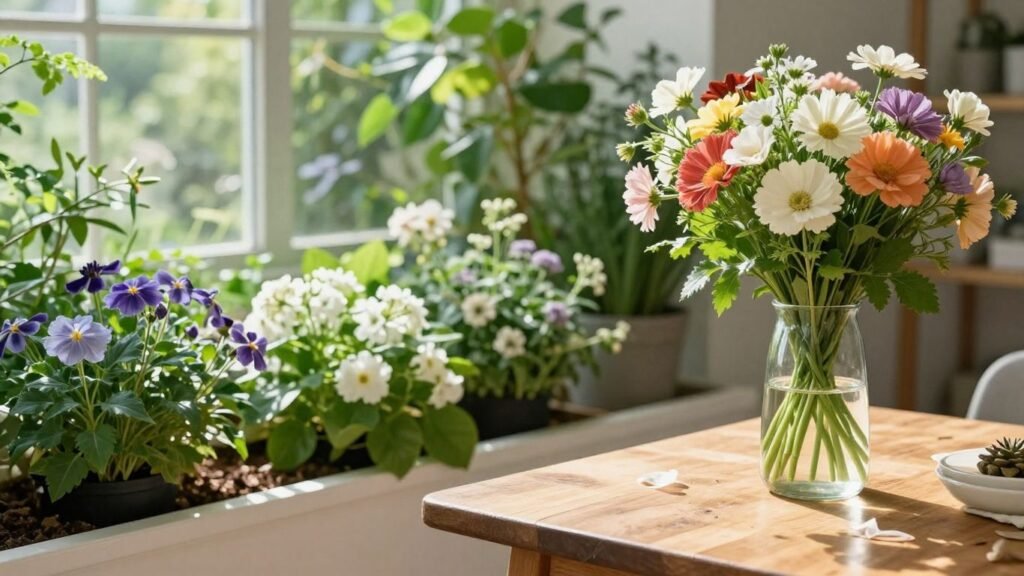
Cut flowers have a different routine from rooted plants: they need clean water, clean tools, and a cool, stable location. Their vase life also depends on the flower type and how fresh the stems were when cut. A useful cut flower care guide can complement the simple habits below.
Prepare stems before placing them in water
Remove leaves that would sit below the waterline, then recut the stems with a clean, sharp knife or pruner. Make the cut at an angle if that helps the stem sit neatly and take up water. Place stems into water promptly, since a long delay can allow the cut ends to dry or draw in air.
Choose a clean vase and fresh water
Wash the vase before arranging flowers, even if it looks clean. Fill it with fresh water and use floral food when it has been supplied and is appropriate for the flowers. Clear water is a helpful visual check; cloudy or discolored water is a reason to clean the vase and replace the water.
Position arrangements away from heat and fruit
Keep arrangements out of direct sun and away from radiators, cooking areas, vents, and cold drafts. Ripening fruit releases gases that can hasten aging in some flowers, so a dining table beside a fruit bowl may not be the best location. Gentle, indirect light and a cool room usually offer a better balance.
Refresh water and trim stems regularly
Check the water level daily and refresh it before the vase becomes nearly empty. When changing water, rinse the vase and trim a small amount from the stems with clean tools. These basic habits are also covered in this fresh flower vase-care guide, while advice on water quality for arrangements is useful when tap water seems to leave deposits or flowers decline unusually fast.
A clean vase and consistent checks will usually matter more than elaborate tricks. For another practical perspective, see these bouquet freshness tips, then adapt the routine to the flowers in your own arrangement.
Prevent and solve common flower problems
Most flower problems become easier to solve when you separate symptoms from causes. A yellow leaf may reflect old age, excess water, poor light, or a nutrient imbalance. Change one condition at a time when possible, and give the plant enough time to show whether the adjustment helped.
Identify yellow leaves, wilting, and brown edges
Yellow leaves in wet soil often suggest root stress, while yellowing in very dim light may reflect weak growth. Wilting in dry soil calls for a thorough drink, but wilting in wet soil calls for a root and drainage check. Brown edges can come from dry air, underwatering, salt buildup, or intense sun, so inspect the setting before reaching for a remedy.
Manage pests without harming beneficial insects
Look beneath leaves and around new growth for aphids, mites, thrips, or sticky residue. Isolate a troubled container when practical, rinse pests away with a gentle stream of water, and remove heavily damaged leaves. Choose the least disruptive treatment that fits the pest, and avoid spraying open flowers when bees and other beneficial insects are active.
Treat mold, mildew, and root rot
Improve airflow, reduce wetting of foliage, and remove badly affected plant material with clean tools. Powdery mildew often appears as a pale coating on leaves, while root rot is more closely associated with persistently wet soil and soft, dark roots. If roots are damaged, trim only the decayed portions and repot in fresh, well-draining mix.
Protect flowers during seasonal changes
Move containers gradually when temperatures change, and check outdoor plants before the first cold nights or heat waves. Frost cloth, temporary shelter, shade, and extra mulch may help depending on the plant and season. Avoid sudden moves from a dark indoor space into strong sun; a short transition period can prevent leaf scorch.
Conclusion
The best flower care routine is observant rather than complicated: give each plant suitable light, water the root zone thoughtfully, provide drainage, and maintain stems and blooms as they change. With a little consistency, both garden flowers and cut arrangements can stay healthier and beautiful for much longer.
Frequently Asked Questions
How often should I water flowers?
Water when the soil has begun to dry at the depth appropriate for the plant, rather than on a fixed schedule. Temperature, pot size, light, humidity, and season all affect how quickly moisture is used.
Should flowers be placed in direct sunlight?
Growing flowers may need direct sun, but the correct amount depends on the variety. Cut flowers generally last longer in a cool place with indirect light, away from hot windows and drafts.
Why are my flower leaves turning yellow?
Yellow leaves can result from overwatering, poor drainage, insufficient light, nutrient imbalance, or normal aging. Check the soil and roots first, then review the plant’s light and feeding routine.
Do all flower pots need drainage holes?
Drainage holes are strongly recommended because they let excess water escape. If you use a decorative container without a hole, keep the plant in a draining inner pot and empty collected water promptly.
How can I make cut flowers last longer?
Use a clean vase, fresh water, cleanly trimmed stems, and remove foliage below the waterline. Keep the arrangement cool and away from direct sun, heat sources, drafts, and ripening fruit.
When should I remove fading flowers?
Deadhead when blooms begin to fade if the variety responds well to it. Cut just above a healthy leaf node, but leave flowers in place when you want the plant to form seed or provide food for wildlife.
What is the first step when a flower wilts?
Check the soil moisture and the plant’s location before watering. Dry soil may need a thorough drink, while wet soil suggests a drainage, root, heat, or disease issue that extra water could worsen.