Key Takeaways
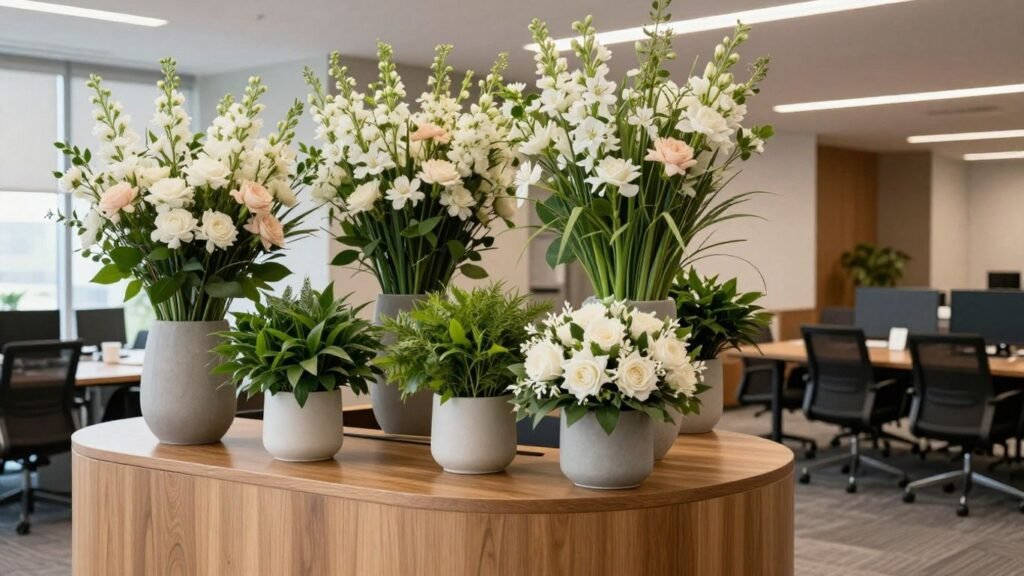
A polished workplace arrangement begins with the purpose, space, and people it needs to serve. The best results come from thoughtful scale, seasonal choices, dependable care, and a clear service plan.
- Define whether flowers are for welcome, atmosphere, events, or recognition.
- Match the arrangement’s shape and size to each corporate setting.
- Coordinate colors, flowers, foliage, and containers with the workplace décor.
- Plan delivery, budgets, and maintenance before placing an order.
- Choose a florist who can provide consistent scheduling and practical advice.
Define your workplace flower arrangement goals
Before choosing stems, decide what the flowers should accomplish. Corporate flower arrangements Altona can make a reception feel warmer, soften a formal meeting room, or bring a little life to an open-plan office. A clear purpose keeps the design polished rather than ornamental for its own sake.
Create a welcoming first impression
Reception flowers are often the first detail visitors notice after entering an office. A low, tidy design feels professional on a reception counter, while a taller arrangement may suit a spacious foyer with more visual breathing room. Choose a display that looks cared for from every angle, especially if guests approach the desk from several directions.
Reflect your brand identity
Flowers can quietly reinforce the character of a business. Clean lines and restrained colors suit a modern consulting office, while abundant greenery may feel more natural in a creative studio or wellness setting. The aim is a considered visual cue, not a literal translation of a logo into petals.
Improve employee and visitor experience
A workplace can feel noticeably more comfortable when shared spaces include natural color and texture. Flowers may add warmth to a waiting area, create a calmer tone in a staff room, or make a milestone feel genuinely acknowledged. Keep fragrance and pollen in mind, since an attractive arrangement should remain comfortable for the people using the space.
Match arrangements to workplace traffic and layout
Observe how people move through the office before selecting a design. Flowers should not narrow a walkway, obstruct a screen, or compete with sightlines across a meeting table. For businesses with several areas, a simple Altona florist guide can provide useful inspiration for comparing styles, budgets, and local delivery considerations.
Choose styles that suit different corporate spaces
The same bouquet rarely works equally well in every room. Reception desks need compact silhouettes, conference tables need conversation-friendly height, and lounges can often support a fuller design. Think about viewing distance, available surface area, and how often the arrangement will be moved.
Reception desk arrangements
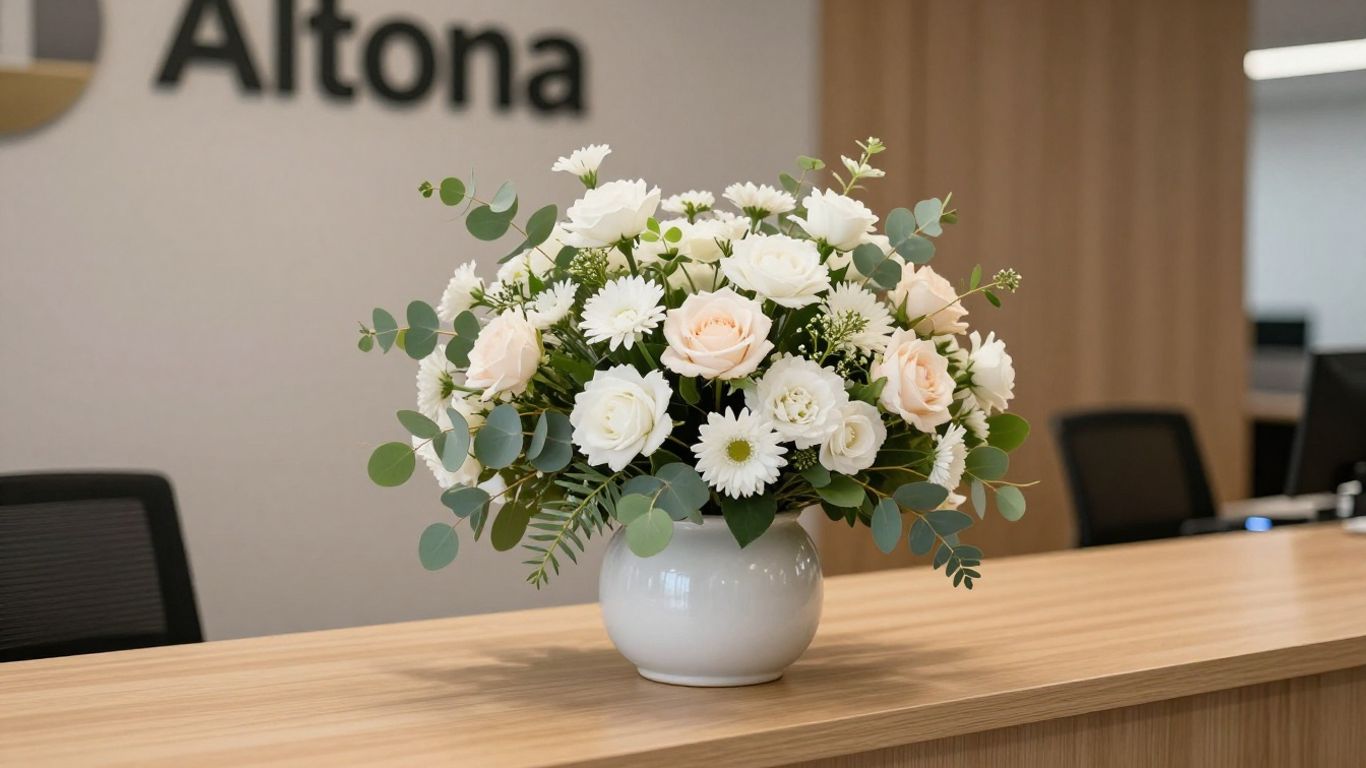
A reception arrangement should look composed without taking over the counter. Choose a stable container and a design that leaves room for signing in, answering calls, or placing visitor materials. Rounded, low arrangements are particularly practical where staff and visitors sit close to the flowers.
Conference room centerpieces
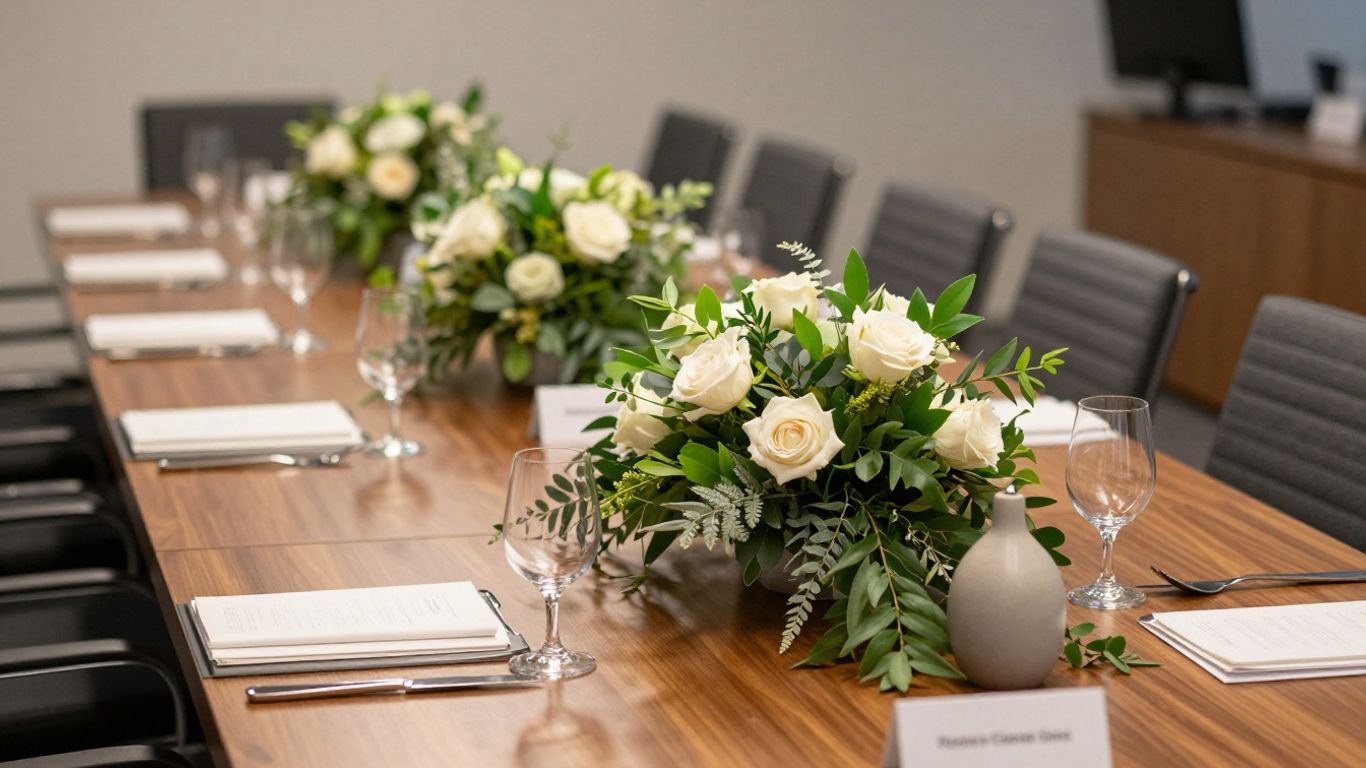
Conference tables call for designs that preserve eye contact. Low horizontal arrangements, small grouped vessels, or a narrow line of foliage can add polish without making the room feel crowded. Avoid heavily scented flowers when meetings may run for several hours.
Open-plan office displays
Open-plan offices benefit from repeating a restrained floral language rather than placing one oversized centerpiece in a busy area. A few modest arrangements can mark shared zones, refresh a breakout table, or add color near a quiet corner. Use containers that are difficult to tip and avoid delicate stems in high-contact locations.
Client lounges and waiting areas
Lounges allow more freedom because visitors generally spend time seated and the surfaces are more decorative. A generous arrangement can anchor a coffee table or sideboard, provided it does not block magazines, refreshments, or the view across the room. For a regional point of comparison, James Cress Florist describes handcrafted flowers, plants, and gift baskets for Altona, Manitoba; the broader lesson is to assess a florist’s range without copying a design blindly.
Select flowers, colors, and containers
Color is only one part of a corporate floral design. Longevity, availability, fragrance, foliage, and the character of the container all affect how the finished piece works in an office. Discuss the room’s lighting and décor before settling on a favorite flower.
Coordinate colors with your brand palette
A workplace does not need flowers in its exact brand colors to feel coordinated. Instead, select one or two related tones and allow foliage or neutral blooms to create balance. A restrained palette usually photographs better, looks less distracting during meetings, and can be repeated across several locations.
Choose flowers for seasonality and availability
Seasonal flowers are often a sensible starting point because they are more likely to be available, fresh, and reasonably priced. Ask for substitutions before ordering so the florist can preserve the intended shape and color if a particular stem is unavailable. Dorothy’s of Werribee notes that its Altona service can support office décor, corporate events, and recurring deliveries, which are useful service categories to clarify when comparing options.
Balance fresh flowers with greenery
Greenery gives an arrangement structure and can make a smaller quantity of flowers feel complete. Broad leaves create a calm base, while fine foliage adds movement and texture. Keep the ratio intentional: too much greenery can look unfinished, but too many blooms may feel visually heavy in a compact office.
Select containers that complement the décor
The vase should support the room rather than compete with it. Matte ceramic can suit a quiet, contemporary interior; clear glass feels lighter; and a dark vessel can ground pale flowers against a bright wall. Check the container’s weight, opening, and water capacity, since practical stability matters as much as appearance.
Plan arrangements for corporate occasions
Occasion flowers need a little more planning than a weekly display. The design, message, timing, and delivery access should all be agreed before the event day. A florist may also need details about loading areas, elevators, table dimensions, and removal after the event.
Office openings and relocations
New premises benefit from arrangements that make an unfamiliar space feel ready for people. Consider one strong welcome display near the entrance and smaller pieces in meeting or hospitality areas. Confirm delivery timing carefully so flowers arrive after cleaning and before guests begin to arrive.
Client meetings and business events
For client meetings, flowers should support the room’s tone without becoming a talking point. Use moderate height, subtle fragrance, and colors that work with the existing furniture. For larger events, repeat the same flower family or container style so separate tables still feel like part of one design.
Celebrations, milestones, and awards
Celebratory flowers can be brighter and more expressive, especially when marking an anniversary, promotion, or award. Keep the arrangement appropriate to the occasion and the recipient rather than relying on a generic festive mix. A short card or discreet color detail can make the gesture feel personal without cluttering the display.
Sympathy and condolence arrangements
Sympathy flowers call for restraint, clarity, and sensitivity. Soft neutrals, whites, greens, and gentle pastels are often suitable, though the right choice depends on the relationship and setting. If flowers are going to a workplace, confirm the recipient, delivery point, and message wording so the gesture reaches the right person discreetly.
Work with a florist in Altona
A good florist should understand both design and the practical limits of a workplace. Share photographs of the space, approximate measurements, access instructions, and the number of people using each area. This gives the florist enough context to recommend something that will look right beyond the first delivery.
Compare design expertise and service options
Look at arrangements made for spaces similar to yours, not only large event installations. Ask whether the florist offers one-off corporate deliveries, event styling, office décor, or recurring arrangements. Altona Meadows flower arrangements are a useful reminder that style, color, flower type, setting, and delivery timing should be considered together.
Ask about delivery schedules and setup
Delivery details can determine whether a polished arrangement arrives ready to display. Ask when deliveries occur, whether setup is included, and how the team handles reception access or multiple floors. For an event, establish both arrival and collection times so staff are not left managing bulky containers afterward.
Confirm customization and recurring orders
A recurring service should still allow sensible changes for seasons, holidays, and company events. Confirm the preferred size, color direction, container style, replacement policy, and contact person. Written details reduce misunderstandings when an office manager, receptionist, or event coordinator places the next order.
Check local experience and customer reviews
Reviews can reveal whether a florist communicates reliably and delivers arrangements that resemble what was ordered. Look for comments about punctuality, freshness, problem-solving, and commercial settings rather than focusing only on photographs. A short consultation is often more revealing than a long gallery because it shows how well the florist listens.
Manage budgets and ongoing flower programs
A corporate flower budget works best when it is planned around frequency and purpose. One impressive event display may cost more than several modest weekly arrangements, while a recurring program can make spending easier to forecast. Decide what level of visual impact each space genuinely needs.
Set a realistic budget per arrangement
Start by separating flowers, delivery, setup, containers, and ongoing care. Then rank the locations: the entrance may deserve more investment than a low-traffic corridor. Ask for two or three size options so the budget conversation is based on clear visual differences rather than vague promises.
Choose between one-time and recurring services
One-time orders suit openings, meetings, awards, and condolence gestures. Recurring services are more useful when the workplace needs consistent presentation throughout the month. Compare the total cost over a quarter, including delivery and replacement terms, before deciding that a lower single-order price is the better value.
Control costs with seasonal flowers
Seasonal flowers can keep a design fresh while giving the florist room to work with what is readily available. Keep the palette and overall shape consistent, but allow the exact stems to change. This approach usually feels more natural than insisting on one flower all year.
Plan arrangements for multiple locations
For offices in several buildings, standardize the design brief rather than ordering identical arrangements without considering each room. Record the dimensions, access notes, delivery windows, and preferred container for every site. A simple table helps the coordinator and florist work from the same information:
| Location | Suitable style | Main planning detail | Typical care need |
|---|---|---|---|
| Reception | Low, structured display | Keep counter space clear | Frequent water check |
| Meeting room | Compact centerpiece | Preserve eye contact | Refresh before meetings |
| Staff area | Relaxed seasonal mix | Avoid busy walkways | Routine trimming |
| Client lounge | Fuller side-table design | Match furniture scale | Monitor light and heat |
This kind of brief makes costs easier to compare and reduces last-minute substitutions. It also gives a new office manager a practical record of what has worked in each location.
Maintain corporate flowers throughout the week
Even a well-designed arrangement loses its polish if care is inconsistent. Assign responsibility before the flowers arrive, and make the routine simple enough to survive a busy workday. Small checks often protect freshness more effectively than a dramatic rescue later in the week.
Schedule watering and routine care
Check the water level daily in warm rooms and every couple of days in cooler areas, following the florist’s advice. Remove fallen leaves from the water, clean visible residue from the container, and keep stems supported. A short care note beside the supply cupboard can prevent the task from being forgotten.
Replace wilted stems promptly
One tired stem can make an otherwise attractive arrangement look neglected. Remove it cleanly and ask whether the remaining design needs a small adjustment. If several flowers decline at once, contact the florist rather than repeatedly topping up the arrangement without identifying the cause.
Position arrangements for ideal light and temperature
Keep flowers away from strong direct sun, heating vents, air-conditioning outlets, and frequently opened doors. Sudden temperature changes can shorten vase life, while harsh light may fade delicate petals. If a display is near a window, rotate it carefully so growth and wear remain even.
Refresh displays without disrupting the workplace
Schedule maintenance before reception becomes busy or after the final meeting of the day. Use a small tray for trimmings and protect desks or tables from water marks. A calm, predictable refresh routine keeps the office presentable without making floral care feel like an interruption.
A helpful maintenance plan is quiet and repeatable: check, trim, reposition, and report any issue before it becomes obvious to visitors. That consistency is what turns occasional flowers into a professional workplace program.
Conclusion
Corporate flowers work best when they are chosen as part of the workplace, not added as an afterthought. Define the purpose, match each arrangement to its setting, allow for seasonal flexibility, and agree on delivery and care from the start. With those decisions in place, a florist in Altona can help create displays that feel welcoming, appropriate, and easy to maintain.
Frequently Asked Questions
What flowers are suitable for a corporate office?
Choose flowers that suit the room’s light, temperature, fragrance tolerance, and level of traffic. Seasonal blooms supported by greenery are often versatile and easy to adapt.
How large should a reception arrangement be?
The arrangement should be visible without taking over the reception counter or blocking staff and visitors. Measure the available surface and choose a stable design with clear sightlines.
Are fresh flowers practical for open-plan offices?
Yes, provided they are placed away from walkways and workstations where they could be knocked over. Select low-fragrance flowers and use sturdy containers in busy areas.
How often should corporate flowers be replaced?
Replacement depends on the flower varieties, room conditions, and service arrangement. Daily water checks and prompt removal of declining stems can extend the display between full refreshes.
Can corporate arrangements match a company’s branding?
They can coordinate with a brand palette through related colors, foliage, and container finishes. A subtle connection usually looks more polished than an overly literal interpretation.
Should offices use one arrangement style throughout the building?
A consistent color direction or container family can create unity, but each arrangement should still suit its location. Reception, meeting rooms, and lounges have different practical needs.
What should I ask a florist before ordering?
Ask about design options, seasonal substitutions, delivery windows, setup, maintenance, replacement terms, recurring orders, and access requirements. Request a clear quote that separates the main costs.