Key Takeaways
Sympathy flowers can offer a quiet, considerate way to show care after a loss. The most appropriate choice depends on the family’s preferences, the setting, and the timing.
- Choose an arrangement that suits the service, home, or memorial venue.
- Check cultural and religious preferences before selecting flowers or colors.
- Confirm delivery details carefully, especially for funeral homes and services.
- Personal touches, such as a favorite flower or thoughtful card, can make an arrangement more meaningful.
- Compare arrangement sizes, delivery fees, and customization costs before ordering.
Understanding the role of sympathy flowers
Flowers cannot remove grief, but they can communicate affection when words feel inadequate. A carefully chosen arrangement may offer comfort to immediate family members or show support from friends, colleagues, and neighbors. For people searching for sympathy flowers Hobsons Bay, the first step is to consider what the gesture should say and where it will be received.
How flowers express condolences
Flowers bring color, softness, and a sense of care to an otherwise difficult time. They may be sent directly to a family home, displayed at a service, or placed beside a photograph or memorial table. A short card alongside the flowers often gives the gesture a more personal voice, particularly when the sender cannot attend in person.
The arrangement does not need to be elaborate to feel sincere. A modest bouquet in calm tones can be just as thoughtful as a large tribute. What matters most is that the flowers are sent with sensitivity and that the message acknowledges the person who has died and the people who are mourning.
The difference between sympathy and funeral flowers
Sympathy flowers are usually sent to express condolences to the family. They may arrive at a home and are often designed for display in a vase or basket. Funeral flowers, by contrast, are more commonly intended for the service itself and may include formal pieces such as wreaths, casket sprays, or standing tributes.
The categories can overlap, so the wording used by a florist is not always a strict rule. If you are unsure, explain the occasion, the recipient, and the delivery address. A florist can then suggest an arrangement that is suitable without making you choose between unfamiliar terms.
When flowers are an appropriate gesture
Flowers are generally a welcome gesture when the family has not asked for donations or requested that flowers be omitted. They can be sent soon after hearing the news, on the day of the service, or later as a gentle reminder that the family is still being thought of. Sending them weeks after the funeral can be meaningful too, when practical support and messages from others may have become less frequent.
For a workplace or community group, a larger arrangement can acknowledge shared loss. For a close friend, a smaller personal bouquet may feel warmer. If the family has published specific instructions, follow those first rather than assuming flowers are expected.
Respecting cultural and religious preferences
Flower customs vary widely. Some families prefer white flowers, while others welcome bright colors as a celebration of life. Certain traditions may favor particular flowers, avoid specific colors, or request donations instead of floral tributes.
When you do not know the family’s preferences, ask someone close to them or check the funeral notice. A neutral arrangement in soft, natural colors is often a considerate choice, but it is still better to confirm than to rely on assumptions. Sensitivity extends to the card wording, delivery timing, and the type of arrangement selected.
Choosing the right sympathy flower arrangement
The shape and scale of an arrangement should match its destination and purpose. A standing tribute may suit a service, while a vase arrangement is easier for a family to enjoy at home. Think about visibility, transport, and whether the family will have help caring for flowers after the funeral.
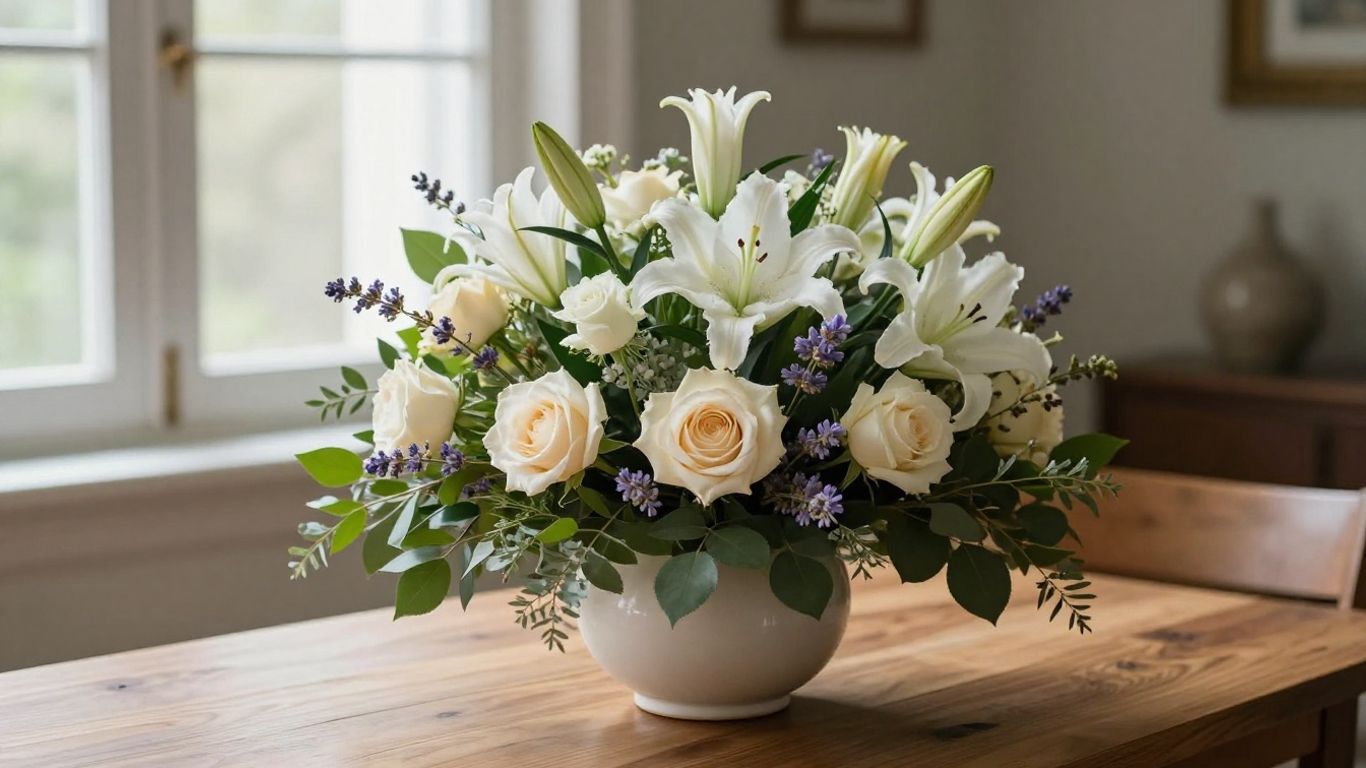
A local florist can explain which designs are currently available and which flowers will hold up well. A Flower Affair, for example, is described as a Hobsons Bay florist that caters to funerals and sympathy needs and offers arrangements and accessories such as cards. That kind of local conversation can be useful when the online product image does not answer every question.
Wreaths, sprays, bouquets, and standing arrangements
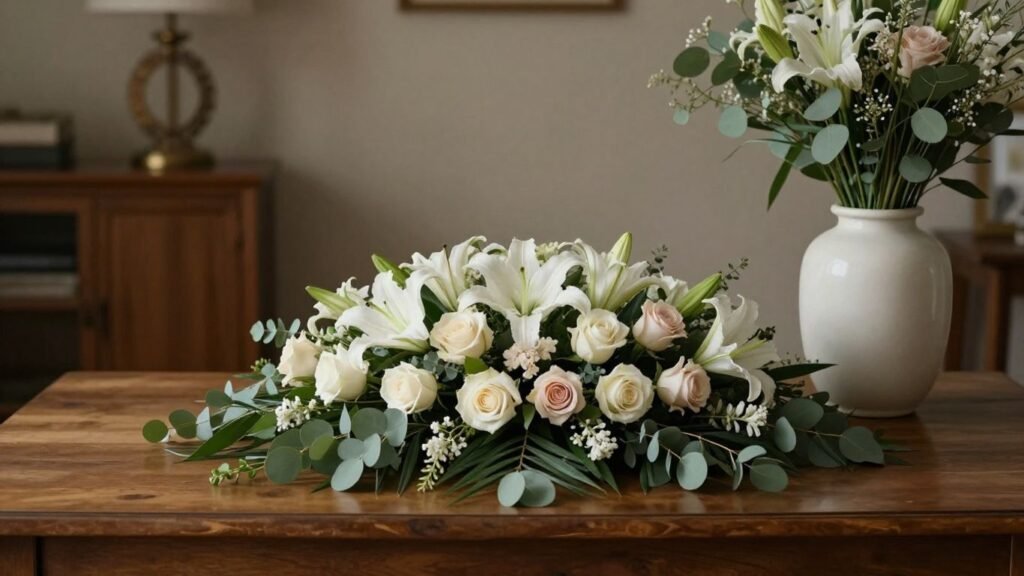
Wreaths are circular designs often associated with remembrance and continuity. Sprays can be arranged horizontally or vertically and may work well on a casket or memorial table. Bouquets and baskets are more flexible, making them suitable for a home, hospital, or reception area.
Standing arrangements are designed to be seen from a distance and are often placed near the front of a service. Hearts and crosses may be chosen when a spiritual or symbolic form feels appropriate. Ask where the flowers will be placed before ordering, since a design intended for a large venue may overwhelm a smaller living room.
Popular flowers and the messages they convey
Flower meanings are personal rather than fixed rules, but some choices are commonly associated with sympathy. Lilies are often linked with peace, roses can express love and respect, and chrysanthemums are used in mourning traditions in some cultures. Carnations, orchids, and seasonal flowers can also create a graceful tribute.
Rather than treating a flower dictionary as a strict guide, consider the deceased person’s personality and the family’s taste. A favorite garden flower may say more than a traditional choice. The freshest and most suitable flowers available locally may also change with the season.
Selecting suitable colors and styles
White and cream arrangements create a calm, formal impression. Pale pinks, lavender, and soft blues can feel gentle without being too stark, while richer colors may suit a tribute intended to celebrate a lively personality. Green foliage adds structure and can keep the design from feeling overly uniform.
The style should feel consistent with the relationship. A formal wreath may be appropriate from an organization, whereas a relaxed seasonal bouquet may feel more natural from a friend. A thoughtful color choice can make the arrangement personal without requiring an elaborate custom design.
Choosing arrangements for the service or family home
For a service, choose a design that is visible, stable, and easy for staff to position. Include the full name of the deceased and the service details with the order. For the family home, choose something that can be placed on a table or counter without taking up too much space.
A basket or vase arrangement is often practical because it can be displayed immediately. If several people are sending flowers, a smaller design may be preferable so the family is not left with more large arrangements than they can manage. A florist can also advise whether a container is included or needs to be arranged separately.
Finding a local florist in Hobsons Bay
A local florist may offer useful knowledge about delivery routes, seasonal stock, and nearby venues. That does not remove the need to ask questions, though. Check the florist’s service area, ordering deadlines, and approach to substitutions before paying.
The best choice is usually the florist that communicates clearly and understands the purpose of the order. You can also review local service-area guidance when assessing whether a business explains its delivery locations with enough specific detail, though the article itself is about service-area pages rather than floral ordering.
Benefits of ordering from a nearby florist
A nearby florist may be able to discuss the arrangement by phone, clarify local delivery details, and suggest flowers that are available that day. Direct communication can be especially helpful when the order has unusual timing or needs to reach a funeral venue.
Local knowledge is not a guarantee of perfect delivery, so ask for confirmation rather than assuming. It is also worth checking whether the florist designs arrangements in-house, uses a local delivery team, or passes the order to another supplier.
Checking delivery coverage across Hobsons Bay
Hobsons Bay includes a number of suburbs and different types of addresses, from private homes to churches, community halls, and funeral venues. Enter the exact suburb and postcode when ordering, then confirm that the florist delivers to the intended location rather than only to nearby residential addresses.
Ask whether delivery charges vary by suburb and whether certain venues have restricted delivery windows. If the recipient is at home, provide a phone number only with the family’s permission and avoid sharing more personal information than the florist needs.
Comparing florist experience and reviews
Reviews can help you assess communication, flower freshness, accuracy of arrangements, and delivery reliability. Look for comments that relate to sympathy or funeral orders rather than relying only on reviews for birthdays and celebrations. A florist’s responses to criticism can also reveal how carefully it handles problems.
Before comparing prices, check whether the displayed image is a standard design or an example of a larger arrangement. For a broader planning comparison, the practical habit of checking service scope, timing, and costs also appears in this car shipping guide, although the subject matter is different.
Confirming availability for custom arrangements
Custom work may require particular flowers, colors, containers, or lead time. Describe the size, destination, preferred palette, and any meaningful details before asking for a quote. If a specific flower is unavailable, ask what substitute would preserve the overall shape and feeling.
Get the final price and delivery timing in writing. It is reasonable to ask whether the florist will contact you if a requested flower must be changed, especially when the arrangement is intended for a service with a fixed start time.
Planning sympathy flower delivery
Timing can feel difficult because funeral arrangements are sometimes announced with little notice. The safest approach is to order as soon as you have the necessary information, while checking whether the family wants flowers sent to the service or home. A florist needs enough time to prepare the design and coordinate the delivery.
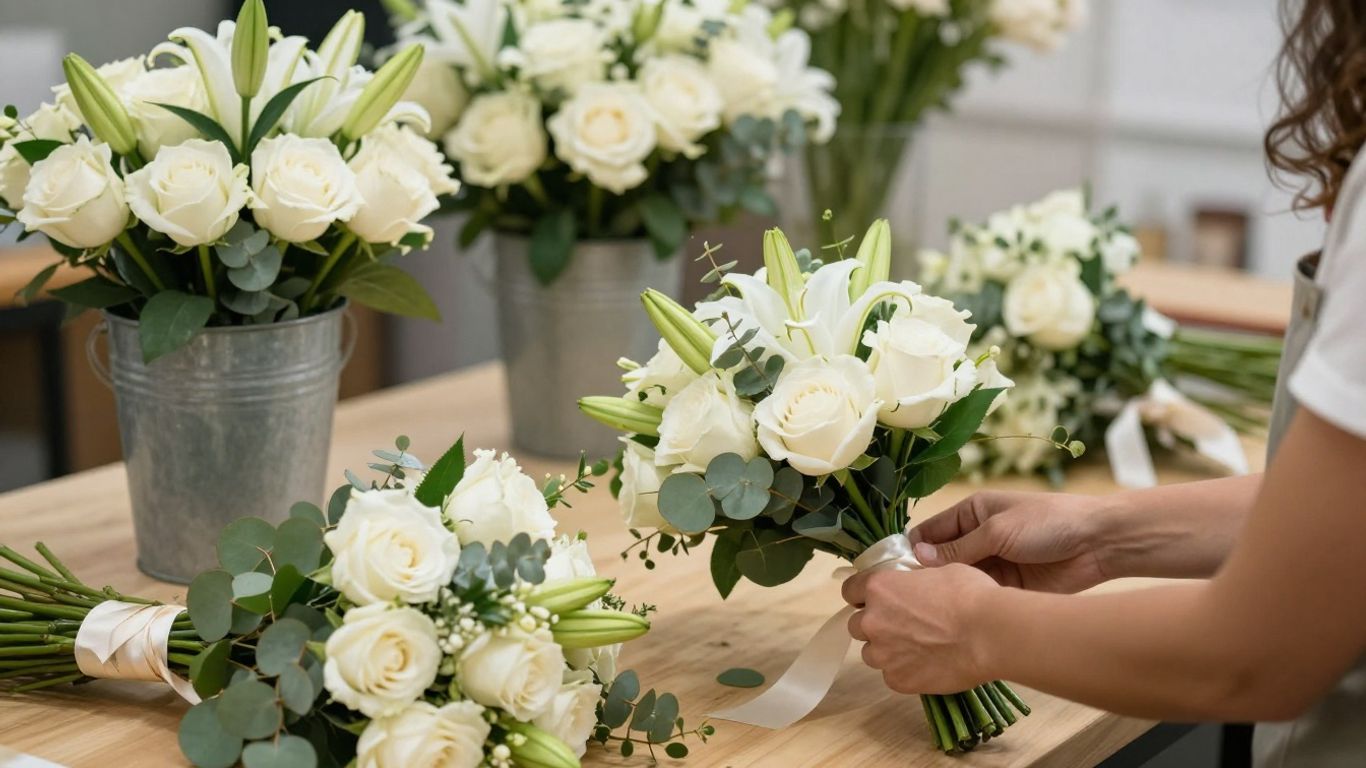
A delivery order should be treated as a practical detail within a deeply personal gesture. Same-day funeral delivery information can illustrate the kinds of timing and venue questions people commonly ask, even though that page concerns a different location. The principle remains useful: confirm the address, deadline, and recipient before submitting the order.
When to place an order
Place an order once you know the service date, delivery address, and family’s preference. If the service is several days away, scheduling ahead may give the florist more choice of flowers and allow time for a custom design. If the notice is late, call rather than relying only on an online form.
For flowers going to a home, delivery a day before the service may be convenient. For flowers going to a venue, ask when deliveries are accepted. A florist may need the venue’s opening hours or a staff contact to make the handover smoothly.
Same-day and scheduled delivery considerations
Same-day delivery depends on location, ordering time, flower availability, and the florist’s delivery schedule. It should never be assumed merely because a website displays a same-day option. Ask for a realistic delivery window and explain if the flowers must arrive before a particular event.
Scheduled delivery is often easier to coordinate and may allow more time for design approval. Keep in mind that a narrow time window can cost more or may not be possible during busy periods. If the service time changes, notify the florist immediately rather than waiting for an automatic update.
Providing accurate funeral home and venue details
Use the venue’s full name, street address, suburb, and postcode. Include the deceased person’s name, the service date, and any room or chapel details. If there is a dedicated receiving desk, ask whether the florist needs a contact person or reference number.
Before finalizing the order, check spelling carefully. A short note such as “please deliver to the chapel reception before the 2 p.m. service” is clearer than a general request for funeral delivery. Accuracy is a small courtesy to the florist and to the venue staff.
Coordinating delivery with the family
Some families prefer arrangements at home, where they can receive them privately. Others want all flowers sent to the service so the tribute can be seen by guests. If you are unsure, ask a close relative or follow the instructions in the funeral notice.
For a home delivery, avoid surprising the family at a difficult moment if a quiet drop-off is more suitable. Provide delivery instructions only with consent, and remember that the family may not be available to answer a phone call.
Personalizing a sympathy flower order
Personalization is most effective when it comes from a real memory rather than an attempt to make the arrangement unusually large. A favorite color, familiar flower, or simple line about the person can make a standard design feel considered. The aim is to honor the individual while keeping the family’s wishes central.
Adding a meaningful card message
A card message can be brief. “Thinking of you and your family” is appropriate when you did not know the deceased well, while a closer relationship may call for a specific memory or expression of gratitude. Avoid offering complicated explanations about grief or suggesting that the family should be strong.
Use your full name, particularly if the flowers are from a group. If several people are signing, ask the florist whether there is enough room on the card and provide the names in the order you want them shown.
Including the deceased person’s favorite flowers
A favorite flower can be a beautiful personal detail, especially when relatives or close friends can confirm it. It might be a garden rose, a particular native flower, or a color associated with the person’s home. Tell the florist why the flower matters, but remain open to a suitable seasonal alternative.
If you do not know the favorite flower, do not guess based on a general personality trait. A balanced arrangement of soft seasonal blooms may feel more respectful than a forced symbolic choice.
Choosing flowers that reflect the relationship
The relationship can guide the tone, scale, and card message. A colleague might choose a dignified arrangement from the team, while a sibling or lifelong friend may select something that recalls a shared interest or place. Partners and immediate family members may prefer a more prominent tribute, provided it fits the service’s arrangements.
Group orders should name everyone clearly and avoid turning the card into a long list of messages. One sincere sentence is usually easier for the family to read than several disconnected phrases.
Requesting custom colors, shapes, or designs
When requesting a custom design, describe the feeling and practical destination as well as the visual details. For example, you might ask for a low arrangement in pale colors for a family table or a tall, formal spray for a chapel. Mention any symbols only if they are appropriate to the family’s beliefs.
A reference photograph can help, but it should be treated as inspiration rather than a promise of identical flowers. Confirm the acceptable substitutions, container, size, and total price before the florist begins the work.
Managing the cost of sympathy flowers
There is no single correct amount to spend on sympathy flowers. A modest arrangement can carry genuine feeling, and a larger tribute may be appropriate when several people are contributing. Set a comfortable budget first, then ask what style will make the strongest impression within it.
Understanding typical arrangement price factors
Price is affected by flower type, seasonality, size, stem count, container, design complexity, and delivery distance. Large standing pieces require more flowers and mechanics, while a small vase arrangement may cost less but still look complete. Imported or unusually scarce flowers can also raise the price.
Ask whether tax, delivery, card fees, and design charges are included. A low displayed price may not reflect the final total if several extras are added during checkout.
Choosing an arrangement for your budget
Tell the florist your budget at the beginning instead of choosing a design and hoping it can be reduced later. The florist may suggest changing the container, using seasonal flowers, or selecting a smaller version while keeping the same general palette.
A useful budget conversation covers three things:
- the arrangement’s intended destination;
- the preferred colors or flowers; and
- the latest acceptable delivery time.
These details help the florist prioritize what matters most. If the design must be sent to a service, delivery reliability may be more valuable than adding a few extra stems.
Comparing delivery fees and service charges
Delivery fees can vary by suburb, distance, time of day, and whether the address is a venue with special receiving requirements. Ask whether the florist charges separately for a card, vase, rush order, or custom design. Confirm the complete price before approving the order.
If multiple people are contributing, one person should handle the final order and retain the confirmation. This reduces duplicate purchases and makes it easier to follow up if the service details change.
Avoiding common ordering mistakes
Most problems come from missing information rather than poor intentions. Double-check the recipient’s name, service location, postcode, delivery date, card message, and sender names. Keep the order confirmation until the flowers have been delivered.
It can also help to review gift ideas for a new mother as a reminder that personal gifts work best when they reflect the recipient’s comfort and individuality, though sympathy ordering requires a more restrained tone. Similarly, bathroom remodeling services have no role in a funeral order, so make sure unrelated search results have not distracted you when comparing local service pages. An IPTV service guide is likewise unrelated to floral delivery and should not be treated as a source for ordering advice.
The final check should be simple: is the arrangement suitable for the setting, can the florist deliver it when requested, and does the message sound like something you would genuinely say? If the answer is yes, the order is ready.
Conclusion
A sympathy arrangement does not need to be perfect or extravagant; it needs to be considerate. By choosing a suitable design, checking the family’s preferences, confirming delivery details, and adding a sincere message, you can offer a quiet expression of care when it is most needed.
Frequently Asked Questions
What flowers are most appropriate for sympathy?
Lilies, roses, carnations, chrysanthemums, orchids, and seasonal flowers can all be appropriate. The best choice depends on the family’s culture, the setting, and whether the flowers reflect the person who has died.
Should sympathy flowers be sent to the funeral or the family home?
Either may be suitable. Follow the family’s instructions when available, and ask whether the service venue accepts flowers. Home delivery can be more private, while service delivery allows the tribute to be seen by attendees.
How far in advance should funeral flowers be ordered?
Order as soon as the service date and delivery details are known. Advance ordering gives the florist more time to source flowers and prepare a custom arrangement, while same-day orders depend on availability and delivery capacity.
What should I write on a sympathy flower card?
Keep the message short, sincere, and compassionate. You might express your condolences, mention that you are thinking of the family, or share one brief and warm memory of the deceased.
Are bright-colored flowers inappropriate for a funeral?
Not necessarily. Soft colors are traditional in many settings, but brighter flowers may be fitting when they reflect the person’s character or the family’s wishes. When uncertain, ask someone close to the family.
How much should sympathy flowers cost?
Spend what feels comfortable. Costs vary with the arrangement’s size, flowers, season, container, design, and delivery distance. A florist can usually suggest an attractive option within a stated budget.
What details does a florist need for funeral delivery?
Provide the recipient or deceased person’s name, venue address, suburb, postcode, service date and time, delivery instructions, card message, and sender details. A venue contact or chapel information may also be helpful.